So you're coming to Hangzhou (杭州). Forget the listicles that send everyone to the same packed bridge — this is how those of us who grew up here actually spend a day around the lake, in the tea hills, and along the old canal. The city's real magic lives on its quiet west and north shores, in the tea mountains just 20 minutes from downtown, and in a few noodle shops tourists never find.
West Lake (西湖) — Where Locals Actually Go
Everyone funnels onto Broken Bridge (断桥, Duàn Qiáo) and the Su Causeway (苏堤, Sū Dī). On a weekend they are a shoulder-to-shoulder river of selfie sticks. Locals go the opposite direction — to the west shore (西里湖) and the Yang Gong Causeway (杨公堤, Yáng Gōng Dī).
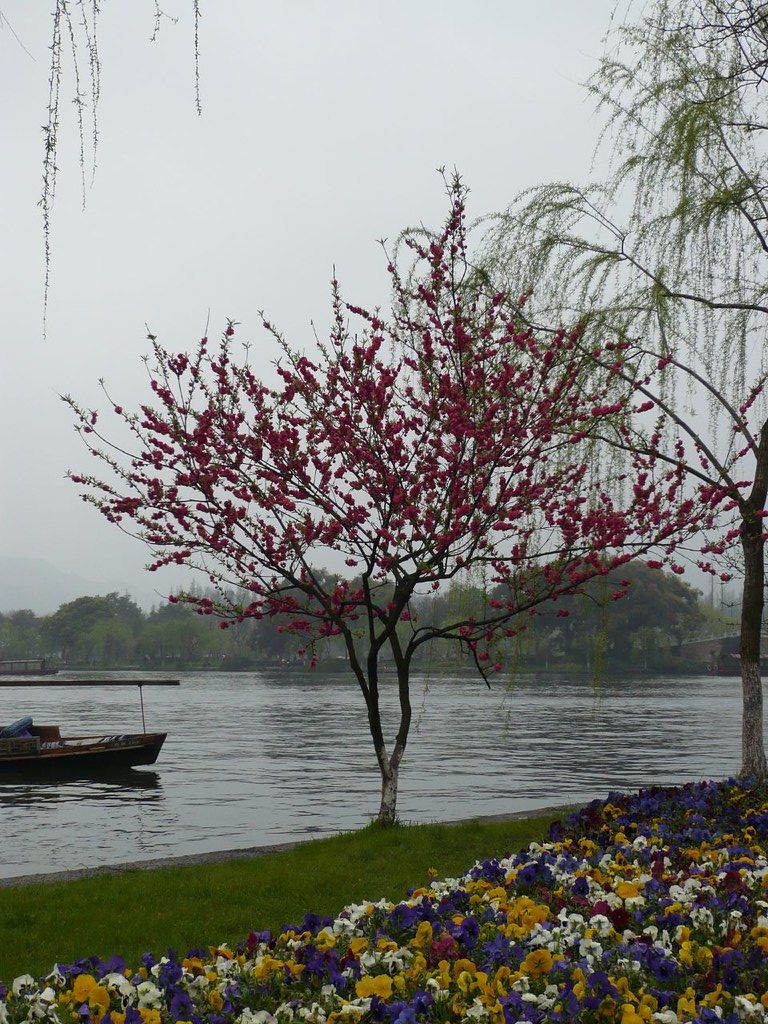
The Yang Gong Causeway is the least-famous of the lake's three causeways and by far the best to wander. It's 3.4 km of plane-tree shade with almost no car traffic, threading past Quyuan Fenghe (曲院风荷), Maojiabu (茅家埠), and Yuhuwan (浴鹄湾) — willow-lined inlets where you can walk for an hour and barely pass another tourist. Maojiabu is also the start of the old Pilgrim's Road (上香古道), the route city pilgrims once walked to the Tianzhu temples.
- Beishan Street (北山街) on the north shore is the local autumn ritual: fallen wutong leaves, withered lotus stalks in the water, and a bench every so often facing the lake. Far calmer than the south.
- Rent a bike. The flat loop 黄龙洞 → 曲院风荷 → 杨公堤 → 乌龟潭 → 太子湾 is beginner-friendly with zero hill climbing. Hangzhou's public bikes are nearly free: first hour ¥0, then ¥1–3/hr. Or grab a Hello/Meituan share-bike with your phone.
Local tip: Skip the big motorized tour boats. Instead take a hand-rowed boat (手划船) from the quiet 茅家埠 side along the old water pilgrim route — far more peaceful than the south-shore boat scrum.
Getting there: Metro Line 1 to 龙翔桥 (Longxiangqiao) puts you on the lake's east side; walk or bus to the west shore. Bus 1314 runs along Yang Gong Causeway; bus 27 climbs from the lake up into the tea hills.
The Tea Villages Locals Escape To
Southwest of the lake, three villages sit in folds of tea-covered hills: Longjing Village (龙井村, Lóngjǐng Cūn), Meijiawu (梅家坞, Méijiāwù), and Manjuelong (满觉陇, Mǎnjuélǒng). This is where Hangzhou people go to slow down.
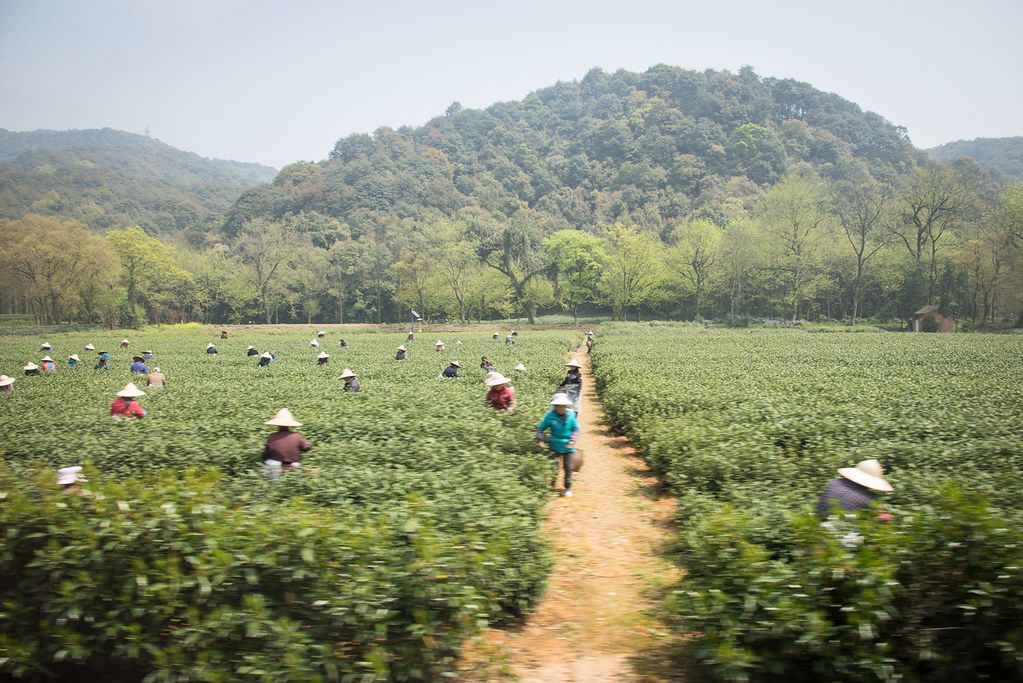
- Longjing Village is the famous one — stone paths along a stream, tea houses, and farmhouse restaurants with hillside views. Touristy on the main lane, lovely the moment you climb a side path.
- Meijiawu is bigger and greener: 2,300+ mu of protected first-grade Longjing tea gardens. Find a 农家乐 (farmhouse restaurant) for lunch.
- Manjuelong is the secret weapon — in late September/October its 7,000+ osmanthus trees (some 200 years old) drench the whole valley in sweet 桂花 fragrance.
Drinking & buying 明前龙井 (míng qián, "pre-Qingming") tea: This is the prized early-spring harvest, picked before April 5. Sit at a tea farmer's table, watch them pan-fry leaves, and drink the year's first cup. Buy directly from a farmer in the village, not from a downtown shop — and taste before you pay. Real West Lake Longjing isn't cheap (good míngqián runs hundreds of RMB per 500g); anything suspiciously cheap isn't the real thing.
Local tip: Honest truth — the villages have become a bit of a "Jiangnan Lijiang," polished for tourists. If you want only tea hills and quiet, locals now drift one valley over to Longwu Tea Town (龙坞茶镇): same endless tea gardens, hidden reservoirs, real noodle shops, far fewer crowds.
Getting there: Bus 27 (岳王路 → 龙井) or 87 (the "osmanthus line," 植物园 → 茅家埠 → 满觉陇 → 苏堤). Buses 103/121 reach Meijiawu.
Lingyin & Feilai Feng — Go at Dawn
Lingyin Temple (灵隐寺, Língyǐn Sì) and the carved cliffs of Feilai Feng (飞来峰, "the peak that flew here") are stunning — and mobbed by 10 a.m.
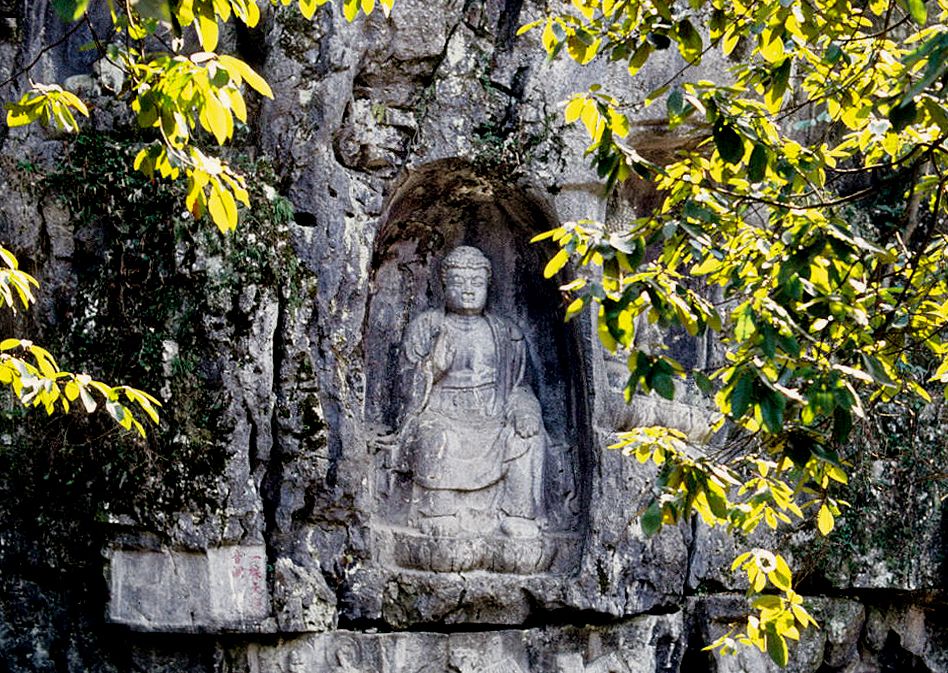
As of Dec 1, 2025 the whole Feilai Feng area — Lingyin, Yongfu 永福寺 and Taoguang 韬光寺 — is free (免票); the old ¥45 gate ticket and ¥30 香花券 are gone. But you must reserve in advance on the "杭州灵隐飞来峰" mini-program and enter with your ID. The move every local knows: arrive before 7:30 a.m. Private cars can no longer drive to the gate — taxi to the 小牙坞 / 西溪路 transfer point and take the ¥2 shuttle (first bus 8:00) in. Before the crowds, you get the carvings, the incense smoke, and the morning light to yourself.
Real Hangzhou Food (杭帮菜)
Hangzhou cuisine is delicate, lightly sweet, and seasonal. Some honest guidance:
- 西湖醋鱼 (Xī Hú Cù Yú) — West Lake vinegar fish. Famous, and genuinely divisive. Done badly (as in most tourist restaurants) it's sour and muddy; done well it's a clean sweet-and-sour. I won't promise you'll love it — order it once, at a serious kitchen, and decide for yourself.
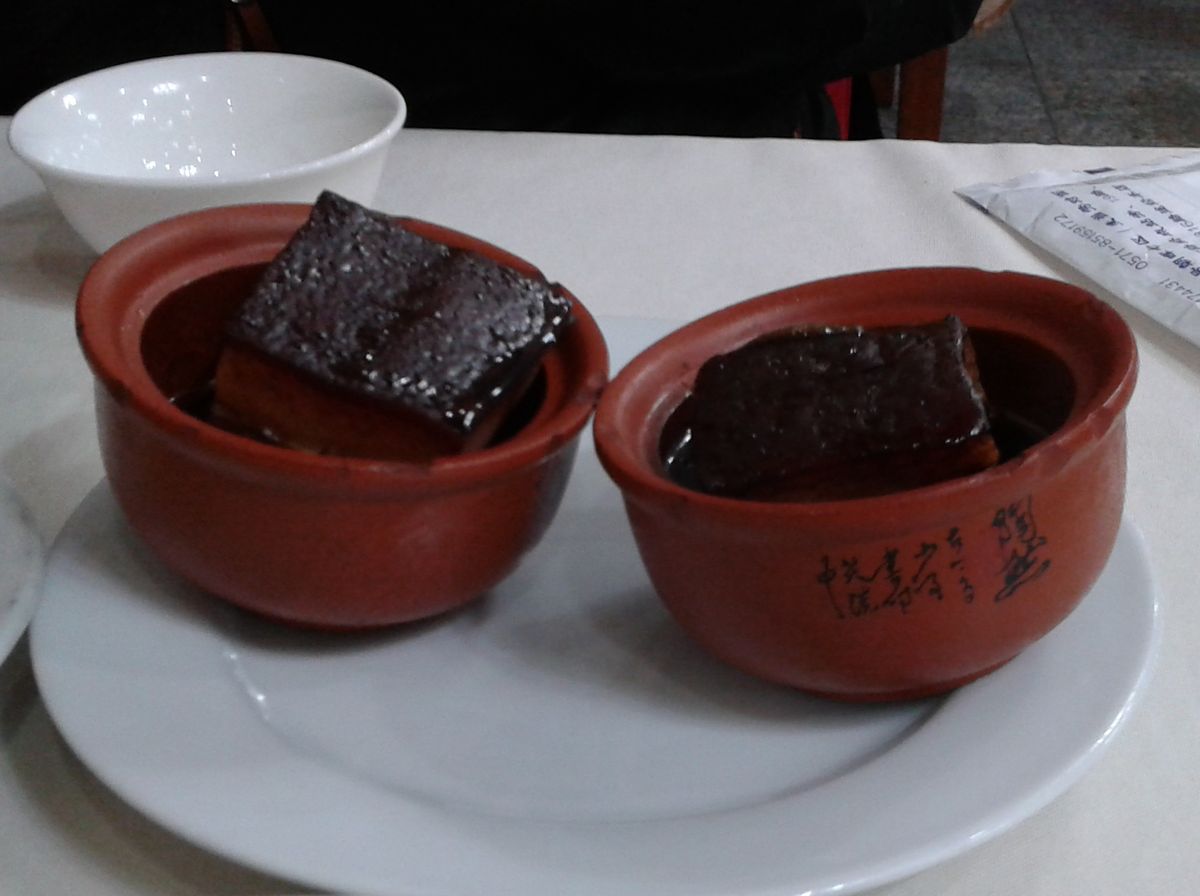
- 东坡肉 (Dōngpō Ròu) — braised pork belly. Named for the poet Su Dongpo. Glossy, melting, sweet-savory. Order this — it rarely disappoints.
- 片儿川 (Piàn'ér Chuān) — noodles with bamboo shoots, pickled greens (雪菜), and pork slices in broth. The everyday local soul food, roughly ¥22–25 a bowl.
- 葱包桧 (Cōng Bāo Guì) — pressed scallion-cruller wrap, brushed with sweet-and-chili sauce. A few-RMB street snack whose name pokes fun at the traitor Qin Hui.
- 定胜糕 (Dìng Shèng Gāo) — pink steamed rice cake with red-bean filling, soft and lightly sweet.
Local tip: The TV-famous noodle houses (菊英面馆, 慧娟) are now tour-bus mobbed and, frankly, coasting on fame. For 片儿川, locals go to small neighborhood shops. For a sit-down 杭帮菜 splurge, 楼外楼 (Lóu Wài Lóu) on Gushan by the lake is the classic — touristy and pricey, but the real deal.
The Grand Canal, Not Hefang Street
Hefang Street (河坊街, Héfāng Jiē) is the default "old street" — restored, fine for one stroll, but a souvenir gauntlet. The genuinely atmospheric old Hangzhou is up on the Grand Canal (大运河, Dà Yùnhé).
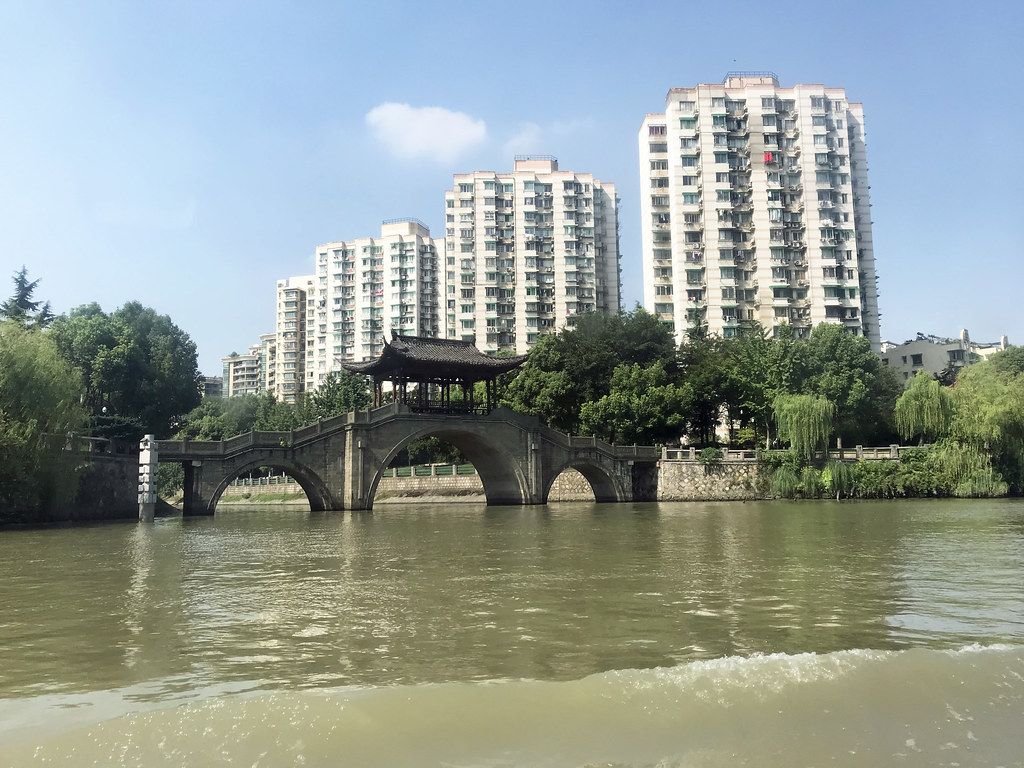
- Xiaohe Zhi Jie (小河直街) — a 1-km lane where three waterways meet, lined with late-Qing and Republican-era houses. Lived-in, low-key, full of local market texture.
- Qiaoxi Historic District (桥西历史街区) — beside the stone Gongchen Bridge (拱宸桥), with four free museums (knife/scissors/sword, fan, umbrella, arts-and-crafts) in old converted factories. Lovely at dusk.
You can ride the canal water bus (¥3) between these spots — slow, cheap, and how locals actually move along the water.
A Perfect Local Day
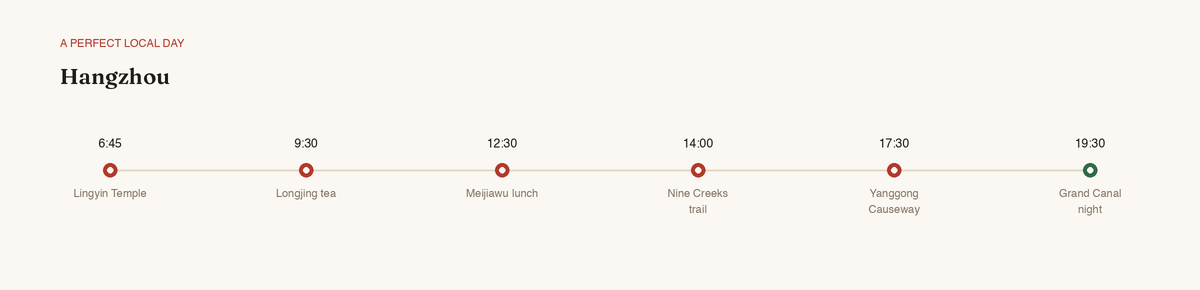
- 6:45 a.m. — Taxi to Lingyin Gate 6; quiet temple + Feilai Feng carvings.
- 9:30 a.m. — Bus 27 up to Longjing Village; tea with a farmer, hillside walk.
- 12:30 p.m. — Farmhouse lunch in Meijiawu (try the tea-leaf shrimp, 龙井虾仁).
- 2:00 p.m. — Walk the Nine Creeks (九溪十八涧), a shaded ~5.5 km stream trail toward the river. Bring sandals — locals wade in. Best light around 5 p.m.
- 5:30 p.m. — Bike or stroll the Yang Gong Causeway west shore as the crowds thin.
- 7:30 p.m. — Dinner of 东坡肉 + 片儿川, then the Grand Canal at Qiaoxi lit up at night.
That's Hangzhou the way we actually live it — tea, water, quiet shade, and food worth the trip. 慢慢走 — take it slow.