If you've never set foot in China, the first thing to know is this: you're about to experience the best public transportation network on the planet. China's high-speed rail (HSR) makes hopping between major cities feel like catching a subway, and the city metros that greet you on arrival are clean, cheap, and almost entirely navigable in English. Forget what you imagined about long, bureaucratic travel days. Once you understand a few basics, moving around China is genuinely a joy.
Why High-Speed Rail Is the Way to Go
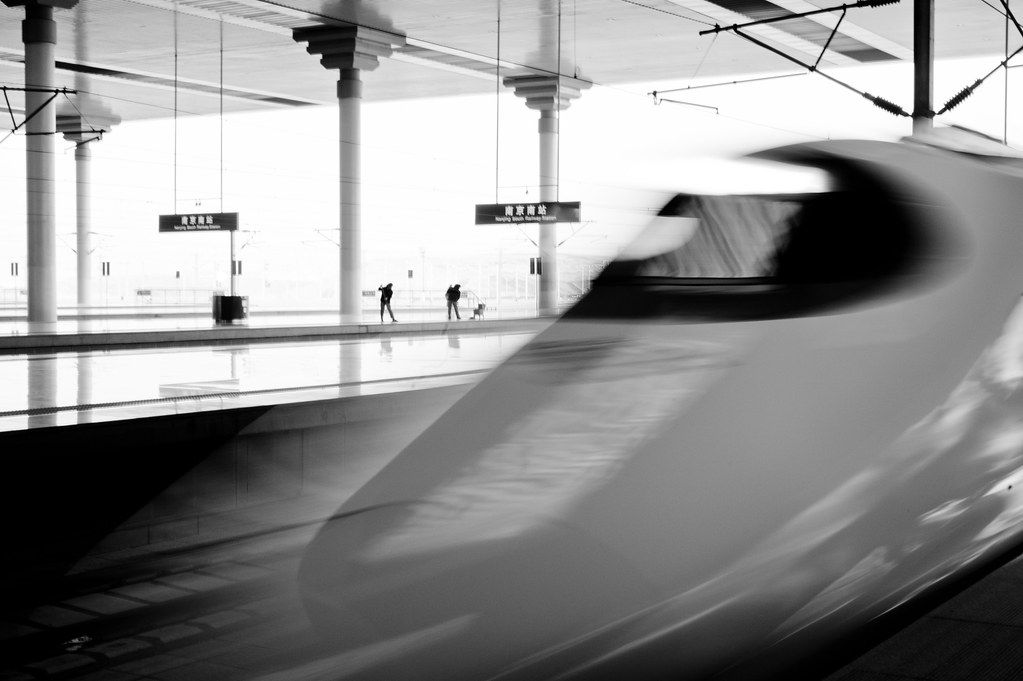
China's HSR network is the largest in the world, now linking roughly 320 cities across more than 45,000 km of dedicated track. Trains routinely cruise at 300–350 km/h, which collapses distances that would otherwise mean a flight. The flagship Beijing–Shanghai route (about 1,300 km) takes just ~4.5 hours city-center to city-center — no airport sprawl, no luggage carousels, no taking your shoes off at security.
You'll see trains labeled with letter prefixes:
- G trains — the fastest, long-distance "Gaotie" bullet trains (up to 350 km/h). Your default choice.
- D trains — slightly slower "Dongche" services, often overnight or regional.
- C trains — short intercity hops between neighboring cities.
Within each train, you choose a seat class:
- Second class — comfortable, 3+2 seating, perfectly good for most journeys and great value.
- First class — roomier 2+2 seating, more legroom, worth it on longer trips.
- Business class — lie-flat-ish reclining seats up front, premium price, a treat on routes like Beijing–Shanghai.
Pro tip: Second class is what locals use and it's excellent. Only splurge on first or business for trips over four hours or when you want to work or sleep.
Booking Your Tickets
Good news for foreigners: you can book trains with just your passport. No Chinese ID or residence permit required. You have two solid options:
- Trip.com — the easiest path for first-timers. Fully in English, takes foreign credit cards, and sends you a clear e-ticket. Small service fee, but worth it for the friction it removes.
- The official 12306 app or website — the state railway's own platform. It now supports English and foreign passports, with no markup. The interface is a little less polished but you book at face value, and it takes foreign Visa/Mastercard/JCB directly. One catch first-timers miss: before you can buy, 12306 makes you complete a one-time passport identity verification (upload your passport page plus a selfie). It's usually approved in minutes but can take a few days — so register and verify a week or two before your trip, not when you need a ticket.
Enter your name exactly as it appears on your passport — this matters at the gate (more below). Tickets go on sale up to 15 days in advance on 12306 — that's the hard maximum (some short intercity C-trains open only ~10 days out; overnight sleepers can open ~20 days out). If your dates fall outside that window, Trip.com lets you pre-reserve earlier and auto-grabs the ticket the moment sales open.
Modern China is essentially paperless. Your passport is your ticket — there's no paper stub to lose. You scan your passport at the gate and walk through.
Pro tip: Book early around the May Day holiday (early May) and the National Day "Golden Week" (first week of October). These are the two busiest travel weeks of the year, and popular routes sell out days ahead. The same goes for Chinese New Year if you're traveling in late winter.
At the Station
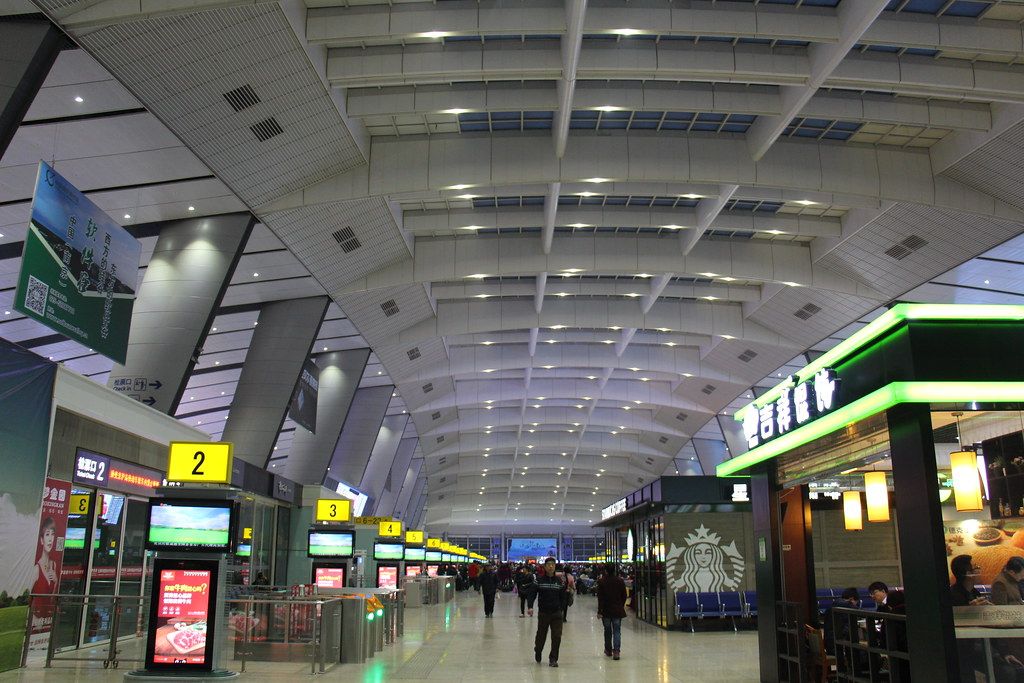
Big-city stations are enormous — closer to airports than the cozy train depots you might picture. Plan accordingly:
- Arrive 40–60 minutes early for major stations (Beijing South, Shanghai Hongqiao, Guangzhou South). Smaller stations need less, but give yourself buffer.
- Pass the security check — bags go through an X-ray scanner and you walk through a metal detector. Quick, routine, no shoe removal.
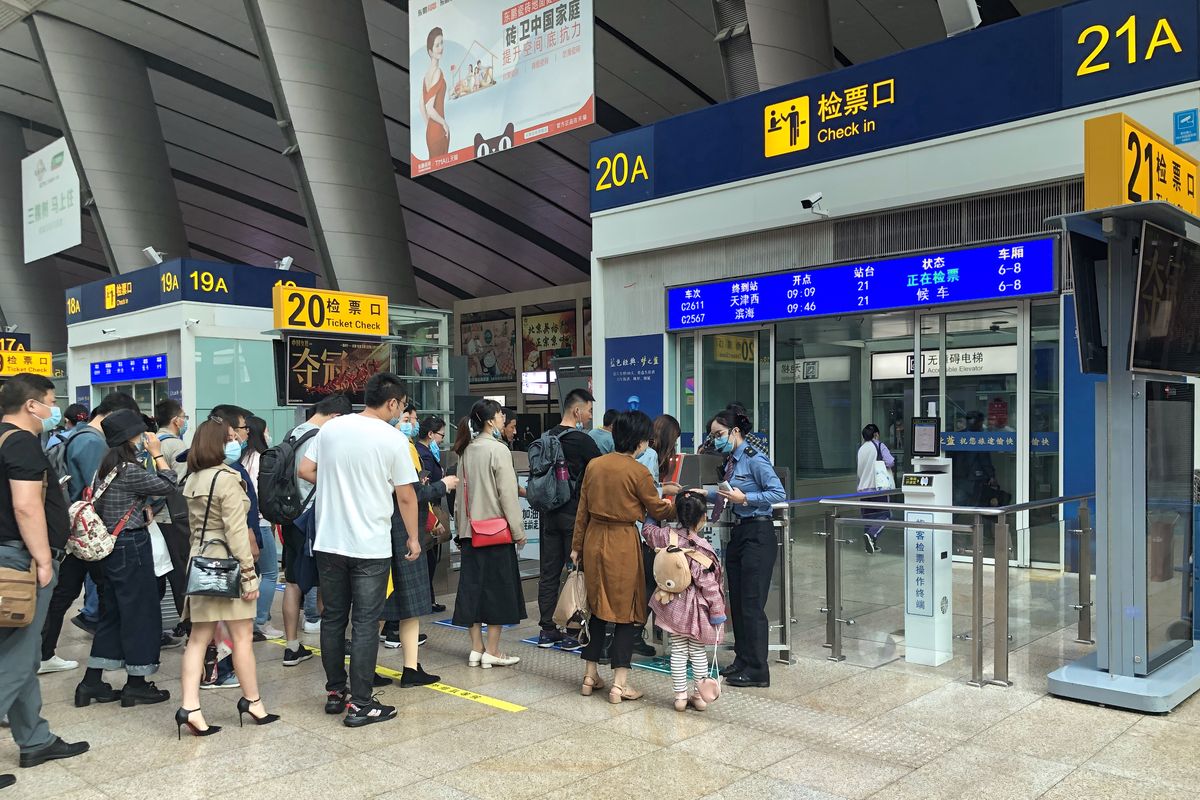
- Clear the passport/ID check. Domestic travelers use face-scan gates; as a foreigner you'll usually go to a staffed lane or a gate where you scan your passport and look at the camera.
- Find your train on the big departure board. Match your train number (e.g., G1). The board shows your waiting area / gate and boarding status.
- Go to your gate and board your car. Gates open ~15–20 minutes before departure. The platform is marked with car numbers — stand near yours.
English signage is excellent throughout. Every sign, board, and announcement is bilingual, and station staff are used to helping international travelers.
Pro tip: Trains depart with military precision. "On time" means exactly on time, and gates close a few minutes before departure. Don't cut it close.
Luggage, Refunds, and Changes
There's no strict weight limit like on flights — you simply carry your bags on board and stow them on overhead racks or the larger end-of-car luggage areas. Keep your belongings with you; there's no checked baggage system, so don't pack anything you can't lift.
Need to change plans? Tickets are refundable and changeable, usually with a sliding fee that grows as departure approaches (refund well in advance and you'll lose little). On Trip.com or 12306 you can do this in-app; at the station, look for the refund/change ("退票/改签") window.
Getting Around Cities: The Metro
Once you arrive, the city metro is your best friend. China's urban subways are modern, spotless, and astonishingly cheap — typically ¥3–7 (about US$0.50–1) per ride, priced by distance.
You have two easy ways to pay:
- Transit QR code in Alipay or WeChat — link a foreign Visa/Mastercard (both apps now support this for tourists), open the metro/transit mini-program, and scan your phone at the turnstile. Fastest, most flexible option.
- Single-journey ticket — buy from the multilingual vending machines or a staffed window with cash or card. You'll get a plastic token or a paper QR depending on the city; tap/scan it in, and again out. Beijing and several cities have phased tokens out for QR entirely, so just follow the icons on the gate.
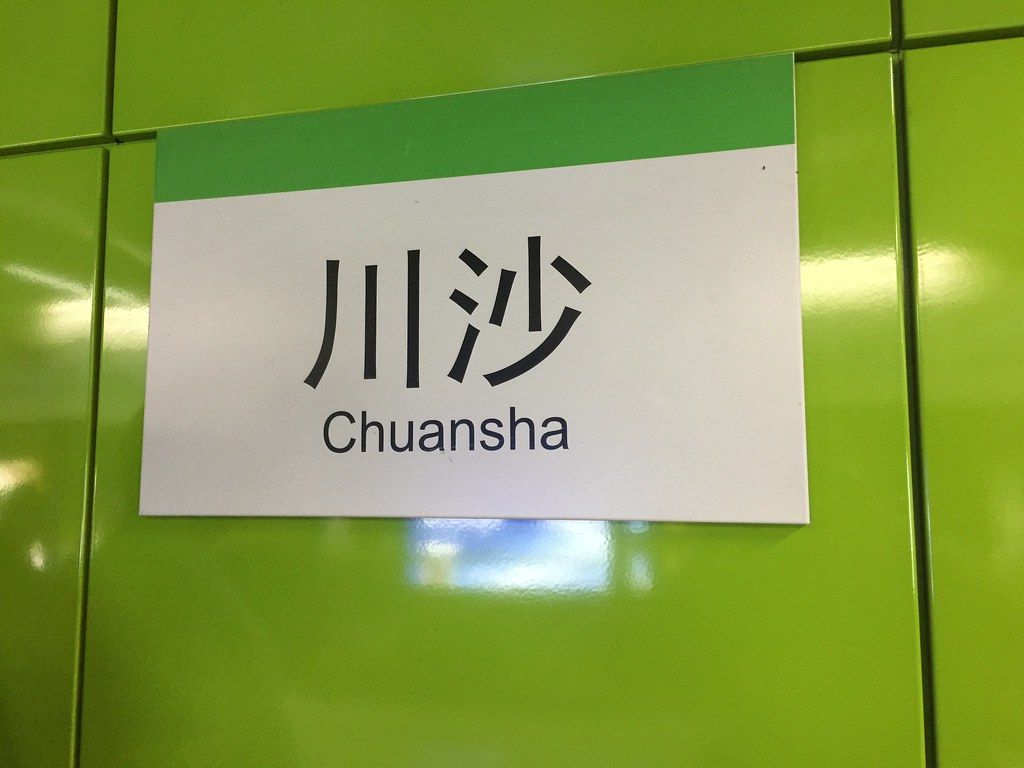
Signage and announcements are bilingual, lines are color-coded, and station maps clearly show interchanges. Most major airports connect directly to the metro or to an airport express line — an easy, cheap way into the city.
Pro tip: Avoid the metro during rush hours (roughly 7:30–9:30 am and 5:30–7:30 pm) in megacities like Beijing and Shanghai — it gets shoulder-to-shoulder packed.
When Rail and Metro Aren't Enough
For late nights, luggage-heavy trips, or destinations off the metro grid, use DiDi (China's Uber). The Alipay and WeChat apps both have a built-in DiDi mini-program with an English interface, and you can pay in-app — no cash, no language barrier. Regular street taxis are plentiful and metered; have your destination written in Chinese characters (or shown on your phone map) since many drivers don't speak English.
A Sample One-Week Rail Itinerary
Here's a classic first-timer loop that shows off the network:
- Beijing (Days 1–2) — Forbidden City, Great Wall, Temple of Heaven.
- Beijing → Xi'an by G train (~4.5–5.5 h). Xi'an (Days 3–4) — Terracotta Army, ancient city walls, Muslim Quarter.
- Xi'an → Chengdu by G train (~3.5–4 h). Chengdu (Day 5) — pandas, hotpot, Jinli street.
- Chengdu → Shanghai by G train (~7–8 h, or take a quick flight to save time). Shanghai (Days 6–7) — the Bund, Yuyuan Garden, French Concession.
Every leg here is bookable on Trip.com or 12306, and each city has a metro waiting to whisk you from the station to your hotel.
Honest Gotchas
- Holidays sell out. Golden Week (October) and May Day are no joke — book the moment tickets release, or build flexibility into your dates.
- Your name must match your passport exactly. A typo or mismatched name can get you turned away at the gate. Double-check before paying.
- Security lines take time. At peak hours, big stations can have real queues. The 40–60 minute buffer exists for a reason.
- Bring your physical passport, not a photo. You'll scan the real document at the gate, and you'll need it to buy or collect tickets.
- Download apps before you arrive — Alipay, WeChat, Trip.com, and DiDi — and set up payment while you still have easy connectivity.
Get these basics down and China opens up effortlessly. You'll be sipping tea on a 350 km/h train, watching the countryside blur past, wondering why travel back home can't feel this easy.