China has never been easier — or more rewarding — for a first-time Western traveler to visit. Recent reforms have swept away the old headaches: visas, payments, and connectivity that once intimidated visitors are now largely solved if you arrive prepared. This guide walks you through everything, step by step, so you can land in Beijing or Shanghai with total confidence.
1. Do You Need a Visa?
China's visa landscape has transformed dramatically since 2024. There are now three main paths into the country.
Unilateral visa-free entry (30 days). As of 2026, citizens of around 50 countries — including most of Europe (France, Germany, Italy, Spain, Netherlands, plus Sweden, added November 2025), Australia, New Zealand, Japan, South Korea, and now the UK and Canada (eligible from February 17, 2026) — can enter China for up to 30 days with no visa at all, for tourism, business, family visits, or transit. This policy is currently extended through December 31, 2026. Your stay is counted from 00:00 the day after you enter.
The 240-hour (10-day) visa-free transit. Crucially, the United States is not on the unilateral visa-free list — but US passport holders are covered by the 240-hour visa-free transit policy. If you are traveling from country A to country C via China, you can stay up to 10 days in 24 provinces. You must enter and exit through one of 65 approved ports (Beijing, Shanghai, Guangzhou, Chengdu, and more), and crucially you need a confirmed onward ticket to a third country within the 240-hour window.
Pro tip: A round trip like New York → Beijing → Tokyo → New York counts as "transit" because Tokyo is a third country. A simple round trip back to the US does not qualify. Plan your flights accordingly, or simply apply for a standard tourist (L) visa for a stress-free, unrestricted visit.
The traditional L tourist visa remains the safest choice for anyone not eligible above, or who wants more than 10 days, plans to enter/exit the same country, or wants freedom to roam without port restrictions.
2. Money & Payments
China is essentially a cashless, QR-code society — and the single biggest reform is that foreign cards now work inside the two super-apps.
- Alipay & WeChat Pay: Download before you arrive and bind your foreign Visa or Mastercard directly in the app. You then pay everywhere by scanning QR codes.
- Transaction limits (2025–2026): Single payments up to US$5,000 and an annual cap of US$50,000. Transactions under 200 RMB carry no fee; above 200 RMB a roughly 3% fee applies.
- Tour Pass / TourCard: Alipay's built-in prepaid wallet lets you top up with a foreign card (limit ~10,000 RMB per 180 days) — a useful fallback if direct card binding fails.
- Cash: Still legal tender and accepted everywhere by law. Carry a few hundred RMB in small notes for street vendors, temples, and rural areas.
Pro tip: Bind your card before you fly. Since late 2025, verification of foreign cards can take 24–72 hours, so set this up at home where you have stable internet.
3. Staying Connected
The "Great Firewall" blocks Google (Gmail, Maps, YouTube, Play Store), WhatsApp, Facebook, Instagram, X/Twitter, and most Western news. But getting around it is simple if you prepare.
- Install a VPN before you arrive — VPN websites are blocked once you're in China, so you cannot download one there. Astrill, LetsVPN, and ExpressVPN are commonly used.
- The easier modern solution: a travel eSIM. A China travel eSIM routes your data through servers outside mainland China (roaming), which means it bypasses the firewall entirely — no VPN needed. Google, WhatsApp, and Instagram just work. Providers like Nomad, Saily, and Airalo sell these.
Pro tip: The firewall only bites when you connect to local Chinese Wi-Fi. On a travel eSIM's data, you're effectively roaming and unrestricted. Keep your home apps on cellular data, not hotel Wi-Fi.
4. Essential Apps
Download and set these up before departure:
- Maps: Amap (高德, has an English mode) or Baidu Maps — far more accurate in China than the blocked Google Maps.
- Ride-hailing: DiDi (China's Uber) — supports English, foreign cards, and is cheaper and easier than hailing taxis.
- Food delivery: Meituan and Ele.me deliver almost anything to your hotel.
- Translation: Pleco (the gold-standard offline dictionary), plus Baidu Translate or Microsoft Translator for camera and voice translation.
- Payments & travel: Alipay, WeChat, and Trip.com (for trains, flights, hotels in English).
5. Getting Around

China's high-speed rail is a marvel — clean, punctual, and reaching 350 km/h, it connects Beijing and Shanghai in under 4.5 hours.
- Book via 12306 (the official railway app/site, now with an English version and foreign-passport identity verification — register a few days ahead, as approval takes up to ~30 minutes) or via Trip.com, which is easier for non-Chinese speakers and needs no separate verification.
- At the station, scan your passport at the gate; it serves as your ticket.
- Metros: Every major city has a clean, cheap, English-signed subway. Pay by scanning an Alipay/WeChat transit QR code.
- Taxis & DiDi: Use DiDi to avoid language and fare issues; it shows the price upfront.
Pro tip: Register on 12306 and verify your passport before you need to buy a ticket — don't do it on the platform an hour before departure.
6. Breaking the Language Barrier
English is limited outside hotels and tourist sites, but technology makes it a non-issue.
- Use camera translation (Microsoft Translator / Baidu) to read menus, signs, and labels in real time.
- Voice translation lets you hold a two-way conversation — speak English, show the Chinese, and vice versa.
- The saved-address trick: Save your hotel's name and address in Chinese characters (screenshot it) so you can show any taxi driver instantly.
- Learn a few words: nǐ hǎo (hello), xièxie (thank you), duōshǎo qián (how much).
Pro tip: Screenshot key destinations in Chinese before heading out — DiDi and translation apps both fail gracefully if you can simply show someone where you want to go.
7. Where to Go First

- Beijing — The imperial heart: the Forbidden City, Temple of Heaven, and a half-day at the Great Wall (Mutianyu is the classic first-timer section).
- Shanghai — China's dazzling modern showcase: the riverfront Bund, classical Yu Garden, and a futuristic skyline.
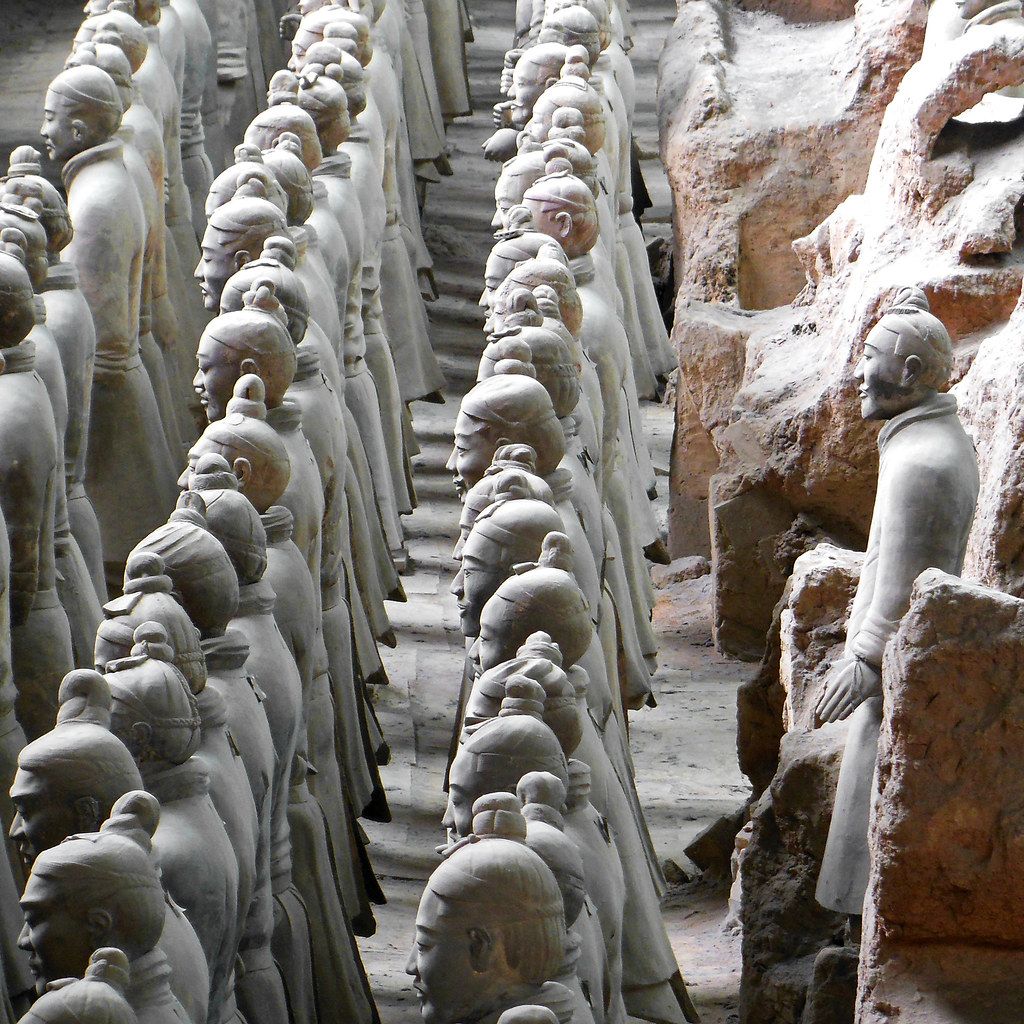
- Xi'an — Ancient capital and home of the Terracotta Army, the city walls, and a buzzing Muslim Quarter food street.
- Chengdu — Laid-back, spicy, and the place to meet giant pandas at the breeding base.
- Guilin & Yangshuo — Postcard karst peaks along the Li River, China's most serene landscape.
8. Food & What to Eat
Chinese food in China bears little resemblance to its Western takeout cousin — it's regional, fresh, and astonishingly varied.
- Beijing: Peking duck, jianbing (breakfast crepe), zhajiangmian noodles.
- Sichuan (Chengdu): Mapo tofu, hotpot, and mouth-numbing málà spice.
- Shanghai: Xiaolongbao (soup dumplings), shengjianbao, hairy crab in season.
- Xi'an: Roujiamo ("Chinese hamburger"), biangbiang noodles, lamb skewers.
Pro tip: Eat where it's busy with locals, use camera translation on menus, and don't fear street food at high-turnover stalls — it's often the best meal you'll have.
9. Etiquette, Safety & Common Scams
China is one of the safest countries in the world for tourists — violent crime against visitors is extremely rare, and you can walk at night in major cities with ease.
- Etiquette: Accept items with both hands, don't stick chopsticks upright in rice, and a modest demeanor goes far.
- Tipping is generally not expected.
- Scams to know: The classic "tea house" / art-student scam (friendly young English-speakers near tourist sites who invite you to a tea ceremony or gallery, then hit you with a huge bill). Politely decline invitations from strangers. Use DiDi instead of unmetered taxis to avoid fare gouging.
10. Budgeting (per day)
- Budget: ~US$40–60 — hostels/budget hotels, street food, metro and trains.
- Mid-range: ~US$80–150 — comfortable 3–4★ hotels, restaurant meals, occasional DiDi and domestic flights.
- Luxury: US$250+ — 5★ hotels, private guides, business-class rail and fine dining.
China offers remarkable value: a high-speed rail ticket, a hearty noodle bowl, and a metro ride together often cost less than a single Western city lunch.
11. A Sample 10-Day First-Timer Itinerary

- Days 1–3 — Beijing: Forbidden City, Tiananmen, Temple of Heaven; full day at the Great Wall (Mutianyu); evening hutong stroll.
- Day 4 — Xi'an: High-speed train from Beijing (~4.5 hrs); evening at the Muslim Quarter.
- Day 5 — Xi'an: Terracotta Army; cycle the ancient city walls.
- Days 6–7 — Chengdu: Fly or rail in; morning with the pandas, an evening hotpot, and the relaxed teahouse culture.
- Day 8 — Guilin/Yangshuo: Fly in; Li River cruise through the karst peaks.
- Day 9 — Yangshuo: Bamboo rafting and countryside cycling.
- Day 10 — Shanghai: Fly in; the Bund by night, Yu Garden, and a final celebratory dinner.
12. Final Pre-Departure Checklist
- [ ] Confirm your visa path (visa-free / 240-hour transit / L visa) and meet its conditions
- [ ] For 240-hour transit: book a confirmed onward ticket to a third country
- [ ] Passport valid 6+ months with blank pages
- [ ] Install & verify Alipay and WeChat Pay; bind a foreign card (do this days ahead)
- [ ] Buy and install a China travel eSIM and/or a VPN before departure
- [ ] Download Amap/Baidu Maps, DiDi, Trip.com, Pleco, and a translation app
- [ ] Register on 12306 and verify your passport for rail tickets
- [ ] Screenshot your hotel name/address in Chinese
- [ ] Carry a few hundred RMB in small cash notes as backup
- [ ] Save offline maps and key phrases; note your country's embassy contact
Sources
- National Immigration Administration — Unilateral Visa Exemption List
- China Embassy (US) — 240-Hour Visa-Free Transit Policy
- China State Council — Payment Service Guide for Overseas Visitors
- China Briefing — China Visa-Free Travel Complete Guide
- Trip.com — How to Book 12306 China High-Speed Rail Tickets for Foreigners
- China Highlights — 10-Day China Itinerary