Here's the first thing to unlearn: "Chinese food" doesn't exist. What you ate back home — sweet-and-sour pork, fortune cookies, gloopy lemon chicken — is a Western invention that barely overlaps with what 1.4 billion people actually eat. China is a continent of cuisines, and the food in Chengdu has about as much in common with the food in Guangzhou as Sicily has with Sweden. The good news? You don't need to be an expert. You just need to be hungry, a little brave, and willing to point at what the table next to you is having. This is your map.
China is traditionally said to have Eight Great Cuisines, but for a first trip you can think in four big flavor worlds, plus a few delicious side quests. Let's eat.
Sichuan — The One That Makes Your Lips Buzz
Sichuan (and its rowdier neighbor Chongqing) is the cuisine everyone warns you about and then can't stop ordering. The signature sensation is málà — "numbing-spicy" — a one-two punch of dried chilies and tingly Sichuan peppercorns that makes your mouth pleasantly vibrate. It's not just heat; it's an experience.
- Hotpot (火锅) — the social event of the trip. A cauldron of bubbling chili-oil broth at your table; you swish in raw meat, tofu, lotus root, and greens. Order a mandarin-duck pot (split half spicy, half mild) if you're nervous.
- Mapo tofu (麻婆豆腐) — silky tofu in a glossy, fiery, peppercorn-laced sauce. The benchmark dish.
- Dan dan noodles (担担面) — springy noodles under chili oil, sesame, and crispy pork.
- Kung pao chicken (宫保鸡丁) — yes, it's real, and the original (with peanuts and dried chilies) is a revelation.
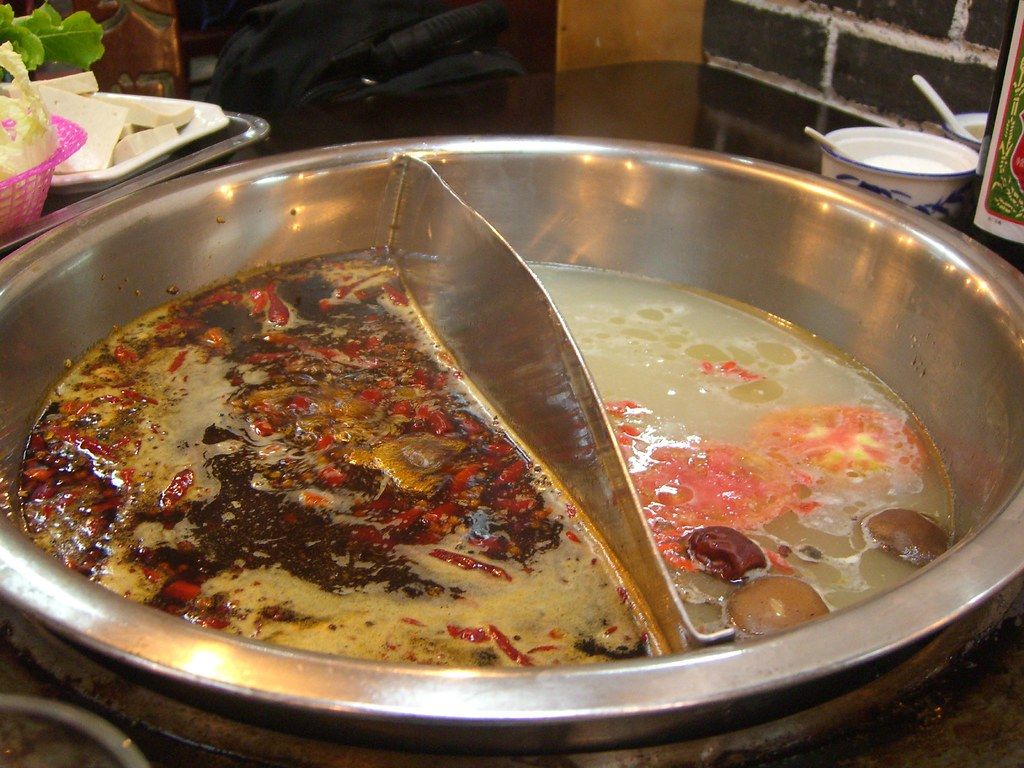
Pro tip: Sichuan "mild" is still a workout. If you're spice-shy, say "bù yào là" (不要辣) — "no spice." For a little, "wēi là" (微辣).
Cantonese — Subtle, Fresh, and the Gentlest Landing
If Sichuan is a rock concert, Cantonese cooking (Guangzhou, Hong Kong, the southern coast) is a string quartet. The philosophy is freshness above all — letting a fish or a vegetable taste like itself. It's the easiest cuisine for a nervous first-timer, and the home of the world's greatest brunch.
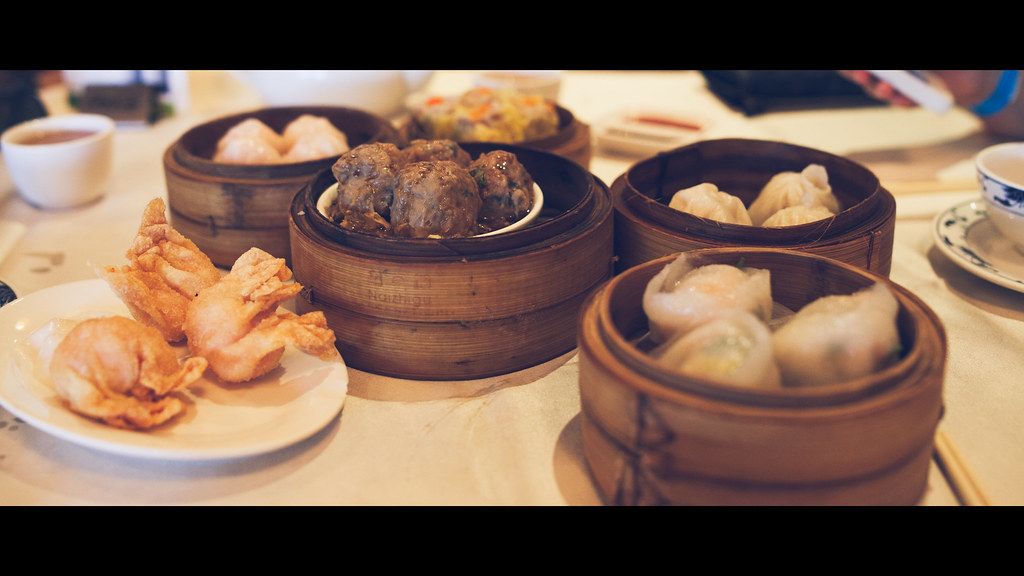
- Dim sum / yum cha (饮茶) — a parade of small steamer baskets: shrimp dumplings (har gow), pork siu mai, BBQ pork buns (char siu bao), custard tarts. Order by ticking a paper card or pointing at the cart.
- Roast goose & char siu (烧鹅 / 叉烧) — lacquered, honey-edged roasted meats hanging in shop windows. Point and they'll chop it for you.
- Steamed whole fish (清蒸鱼) — with ginger, scallion, and a splash of soy. Pure and delicate.
- Congee (粥) — silky rice porridge, the ultimate comfort and breakfast.
Jiangnan & Shanghai — Sweet, Glossy, and Soup-Filled
The lower Yangtze region (Shanghai, Hangzhou, Suzhou) cooks in a gentler, slightly sweeter register, heavy on soy, sugar, and rice wine. This is the land of the soup dumpling, and it might convert you forever.
- Xiaolongbao (小笼包) — delicate steamed dumplings filled with pork and hot soup. Bite a small hole, sip the broth, then eat. Don't inhale it whole; it bites back.
- Shengjianbao (生煎包) — the pan-fried cousin: crispy bottom, juicy inside, sesame on top.
- Hongshaorou (红烧肉) — "red-braised pork," cubes of belly glazed mahogany-dark in soy and sugar. Mao's favorite, and possibly soon yours.
- Dongpo pork (东坡肉) — a Hangzhou icon, a melting square of braised belly named after a poet.
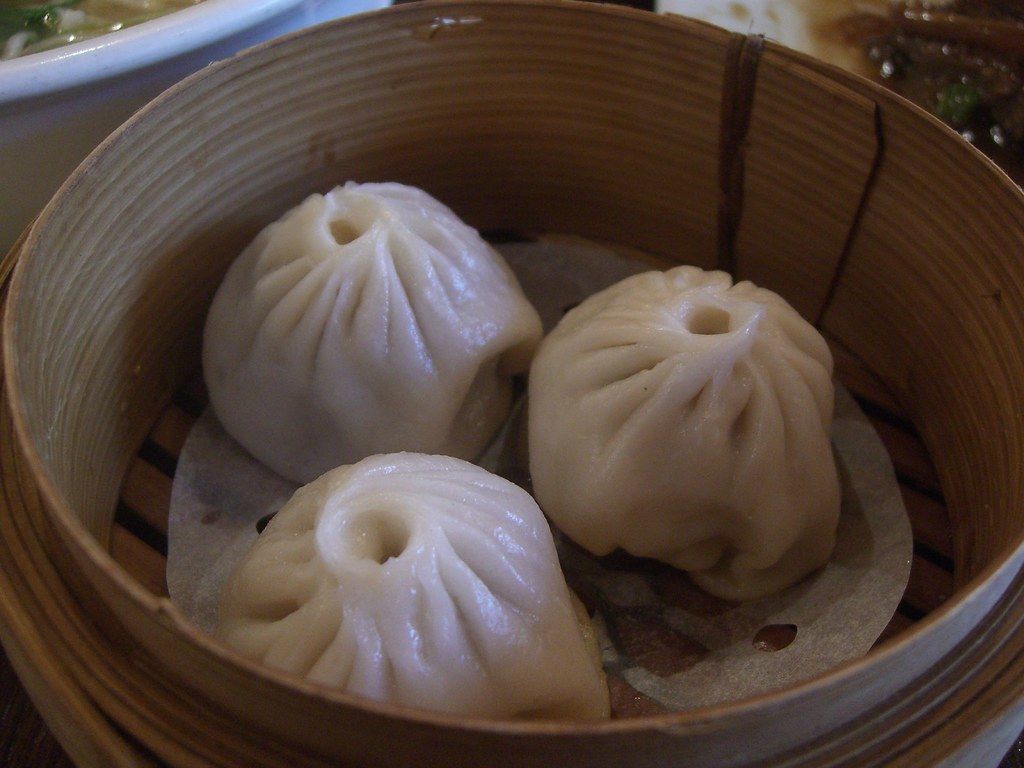
Pro tip: A small dish of black vinegar with slivered ginger is the classic xiaolongbao dip. Get a little broth on the spoon first — straight from the steamer, it's lava.
Northern China — Wheat, Lamb, and the Duck
Up north (Beijing, Xi'an, and the wheat-belt), rice gives way to noodles, dumplings, and bread, with bold roasted and grilled flavors and the warming hit of cumin and lamb from the Silk Road.
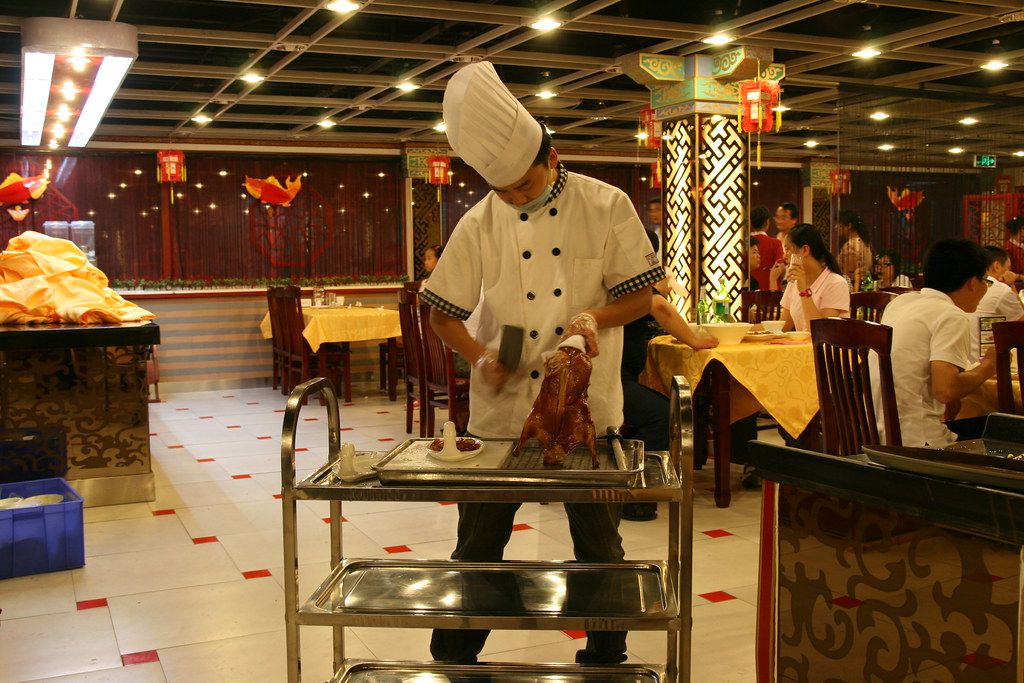
- Peking duck (北京烤鸭) — crackling, burnished skin and tender meat, wrapped in thin pancakes with scallion, cucumber, and sweet bean sauce. A bucket-list meal; go to a dedicated duck restaurant.
- Roujiamo (肉夹馍) — Xi'an's "Chinese hamburger," stewed spiced meat stuffed in a crisp griddled bun.
- Hand-pulled & biang biang noodles (拉面 / biángbiáng面) — watch a cook stretch dough into noodles by hand, then drown them in chili and vinegar.
- Lamb skewers (羊肉串) — cumin-and-chili grilled lamb, the soul of any northern night market.
- Jianbing (煎饼) — the breakfast crepe: egg, crispy cracker, scallion, sauce, folded hot off the griddle.
Quick Detours Worth Taking
- Hunan (湘菜) — spicier than Sichuan to many, but sour-hot rather than numbing. Try steamed fish head with chopped chilies.
- Yunnan (滇菜) — China's most exotic larder: wild mushrooms, fresh herbs, and crossing-the-bridge noodles, where you cook the ingredients tableside in a bowl of scalding broth.
- Northeast (东北菜) — hearty, generous, and cheap: guōbāoròu (sweet-sour crispy pork) and pork-and-cabbage dumplings.
How to Actually Order
You will not speak the language, and that is completely fine. Restaurants are used to it.
- Photo menus & pointing are everywhere. Don't be shy about gesturing at another table's dish.
- The camera-translate trick: Point your phone at a Chinese menu and a translation app overlays English in real time. Serica's built-in menu scanner does exactly this and is a lifesaver — snap the menu, read it in English, tap to order.
- Share everything. Meals are communal: order several dishes for the table, not one entrée each. A good rule is roughly one dish per person plus one extra.
- Rice comes last. In a proper meal, plain rice (mǐfàn, 米饭) is a filler at the end, not a base — ask for it when you're ready.
- Tea is often free and poured generously. Tap the table with two fingers to say "thank you" for a refill — the local etiquette.
Pro tip: Save a few phrases as screenshots: 不要辣 (no spice), 我吃素 (I'm vegetarian), 买单 / mǎidān (the bill). Flash the right one and you're golden.
Street Food & Night Markets
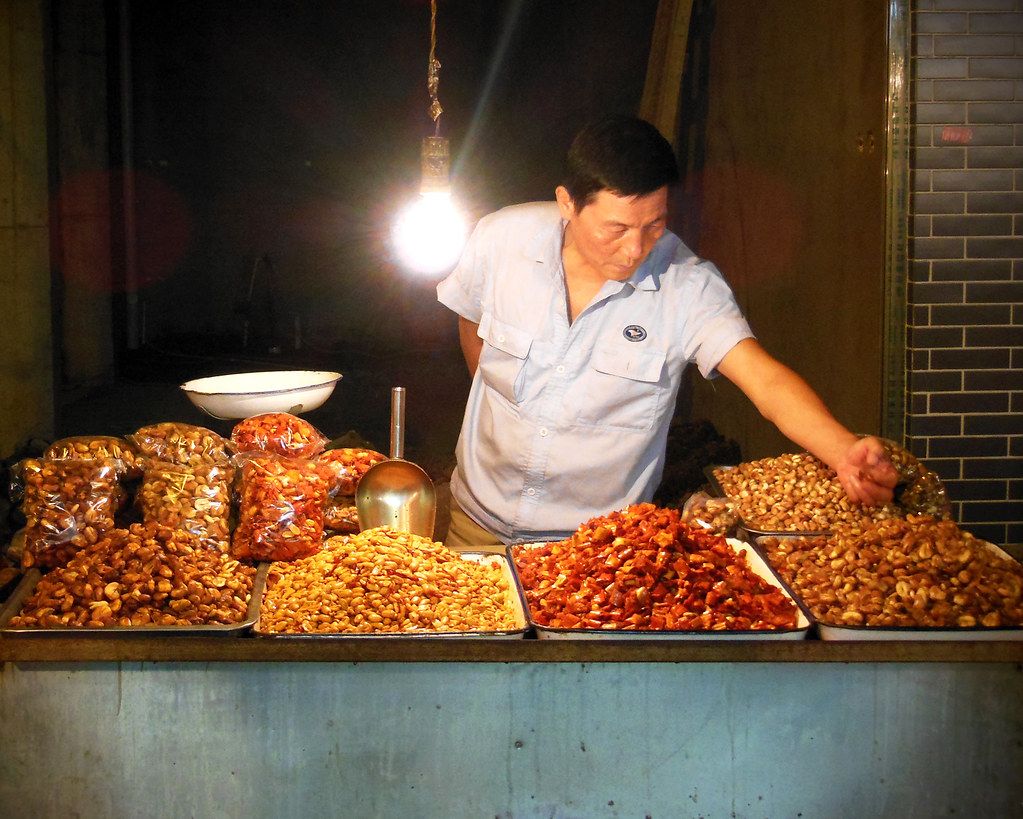
Night markets are where China eats best and cheapest — skewers, jianbing, stinky tofu, grilled squid, sugar-glazed haws. They're also, contrary to nervous instinct, often the safest food you'll eat.
- Follow the crowds. A stall with a long line of locals has high turnover, which means fresh ingredients and a constantly hot wok. Busy = fresh = safe.
- Watch it cook. Choose food made to order in front of you over anything sitting lukewarm.
- Pay by QR. Most stalls use Alipay or WeChat Pay. Set these up before you travel (link a foreign Visa/Mastercard) — cash is increasingly rare, and few vendors take cards. Good news on fees: linked foreign-card payments under ¥200 are free, and only a small (~3%) fee applies above that, so street-food-sized buys cost you nothing extra.
Dietary Needs, Honestly
- Vegetarian/vegan: Say or show "wǒ chī sù" (我吃素). Be aware that broths, lard, and oyster sauce hide in "veggie" dishes; Buddhist restaurants (素菜馆) are a safe, delicious bet.
- Allergies: Peanuts and tree nuts are common, especially in Sichuan/kung pao. Shacha (沙茶) sauce contains shrimp and nuts. Carry a written allergy card in Chinese — verbal won't cut it.
- Halal: Look for 清真 (qīngzhēn) signs and green Arabic-script storefronts; the Lanzhou beef-noodle chains are reliably halal and everywhere.
- Spice: bù yào là (none), wēi là (mild), zhōng là (medium). Trust your read of the room.
Drinks
- Tea (茶) is the national drink — green, oolong, pu'er, jasmine — and tea houses are a lovely afternoon.
- Baijiu (白酒): the fierce grain liquor that appears at banquets. A warning: it's 40–60% alcohol and toasts come fast. Sip, don't chug, and it's perfectly fine to demur.
- Beer (啤酒) is light, cheap, and the natural partner to hotpot and skewers. Tsingtao and Yanjing are everywhere.
- Coffee has exploded — Luckin and indie cafés are in every city now, so caffeine addicts can relax.
A Few Honest Truths
- Don't drink the tap water. Stick to bottled or boiled. Hot-water dispensers are everywhere (it's the cultural default), and hotels provide kettles — locals drink water hot.
- The MSG scare is a myth. Decades of research found no basis for "Chinese restaurant syndrome." Eat freely.
- You can skip the "weird" stuff. Chicken feet, century eggs, stinky tofu, sea cucumber — try them if curious, but no one's judging if you don't. There's infinite delicious, unintimidating food.
- Hygiene: Trust the busy places. Carry tissues and hand sanitizer (many spots don't stock napkins or have squat toilets), and you'll be fine.
Now go get hungry. The best meal of your trip is probably at a place with no English sign, full of locals, that you'll find by simply following your nose. Mànmàn chī — eat slowly, eat well.