So Chengdu (成都, Chéngdū) is my city, and I'm going to tell you how to do it the way we actually do it — not the way the tour buses do it. The golden rule here is 安逸 (ānyì) — "comfortable, unhurried, just right." If you're rushing, you're doing it wrong. Slow down, eat well, and let the city's 慢生活 (slow life) work on you.
Where We Actually Live & Eat: Yulin 玉林
Forget the postcard streets for a second. Yulin (玉林, Yùlín) is the soul of Chengdu — a grid of leafy, low-rise 1980s–90s apartment blocks south of the center, with the highest density of 苍蝇馆子 (cāngyíng guǎnzi, literally "fly restaurants" — tiny, grungy-looking, unbelievably good) in the city. This is where you eat.
- 老刘烧烤 (Lǎo Liú Shāokǎo) on Yulin 3rd Alley (玉林三巷) — a shāokǎo (BBQ skewer) institution open 21 years. Opens at 6pm; by 8pm there's no seat. Order the chicken wings (烤鸡翅), bullfrog (牛蛙), pork belly (五花肉), and grilled crucian carp (烤鲫鱼).
- 陈记蛋烘糕 (Chén Jì Dàn Hōng Gāo) — Grandma Fan, 70+, has been griddling dàn hōng gāo (egg crepe-cakes, fluffy little folded omelet-pancakes with sweet or savory fillings) for 30+ years from a cart near Yulin East Road. She rolls out around 4–5pm.
- 飘香火锅 (Piāoxiāng Huǒguō) — old-school 清油锅底 (qīngyóu, rapeseed-oil broth), more fragrant than punishing.
Local tip: A 苍蝇馆子 looking dingy is a good sign. Plastic stools, communal tables, a handwritten menu on the wall — that's where the flavor lives. Empty + shiny = tourist trap.
Hotpot 火锅, Done Right
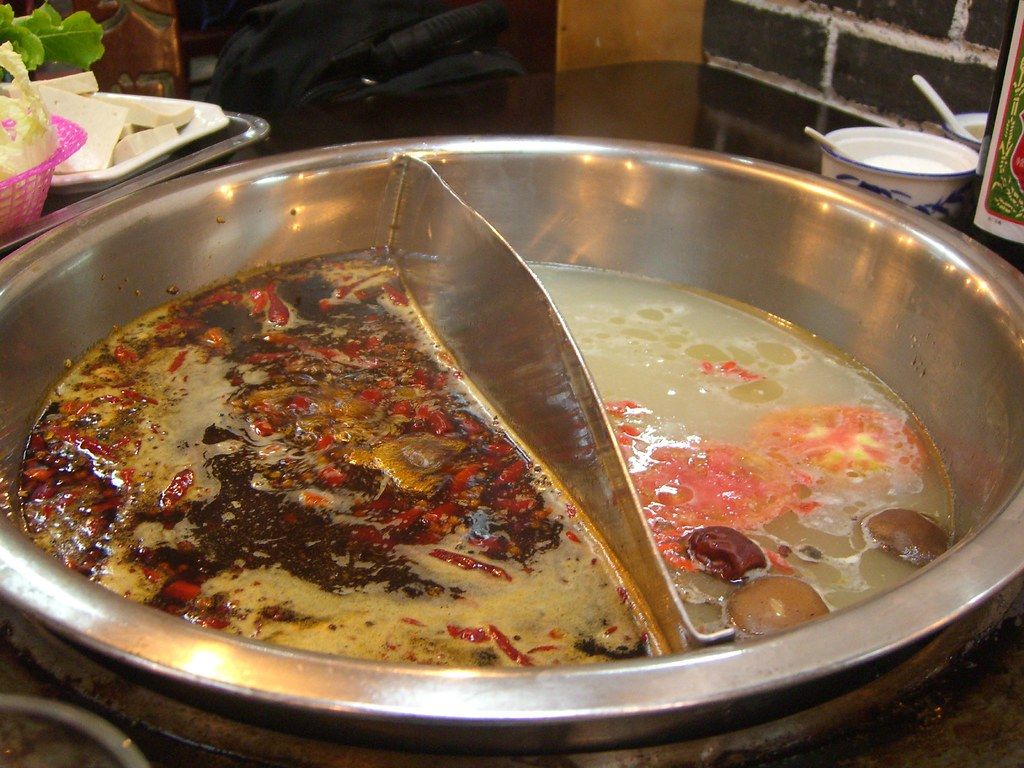
Chengdu hotpot (火锅, huǒguō) isn't about who can suffer the most. Ours uses fragrant rapeseed oil and floral green Sichuan peppercorns (花椒, huājiāo) — it should make your lips buzz pleasantly (麻, má), not just burn.
- The oil dish (油碟, yóu dié): Locals keep it simple — sesame oil (香油), minced garlic (蒜泥), a little cilantro and oyster sauce. The sesame oil cools the food and coats your stomach. Skip the dozen random sauces; that screams tourist.
- The long black chopsticks are for putting raw meat in the pot only. Your own chopsticks are for eating. Never double-dip from plate back into the pot.
- What to order: 毛肚 (máodǔ, beef tripe — swish 7–8 seconds, "七上八下"), 鸭肠 (yācháng, duck intestine), 脑花 (nǎohuā, brain — trust me), 耗儿鱼 (mouse fish), and 酥肉 (sūròu, fried pork) to dunk.
A solid local hotpot dinner runs ¥80–130/person. Ask for 微辣 (wēilà, mild) or 鸳鸯锅 (yuānyāng, split spicy/clear pot) if you're new.
Teahouse Culture: People's Park 人民公园
This is the most Chengdu thing you can do. Inside People's Park (人民公园), He Ming Teahouse (鹤鸣茶社, Hèmíng Cháshè) has been pouring tea since 1923.
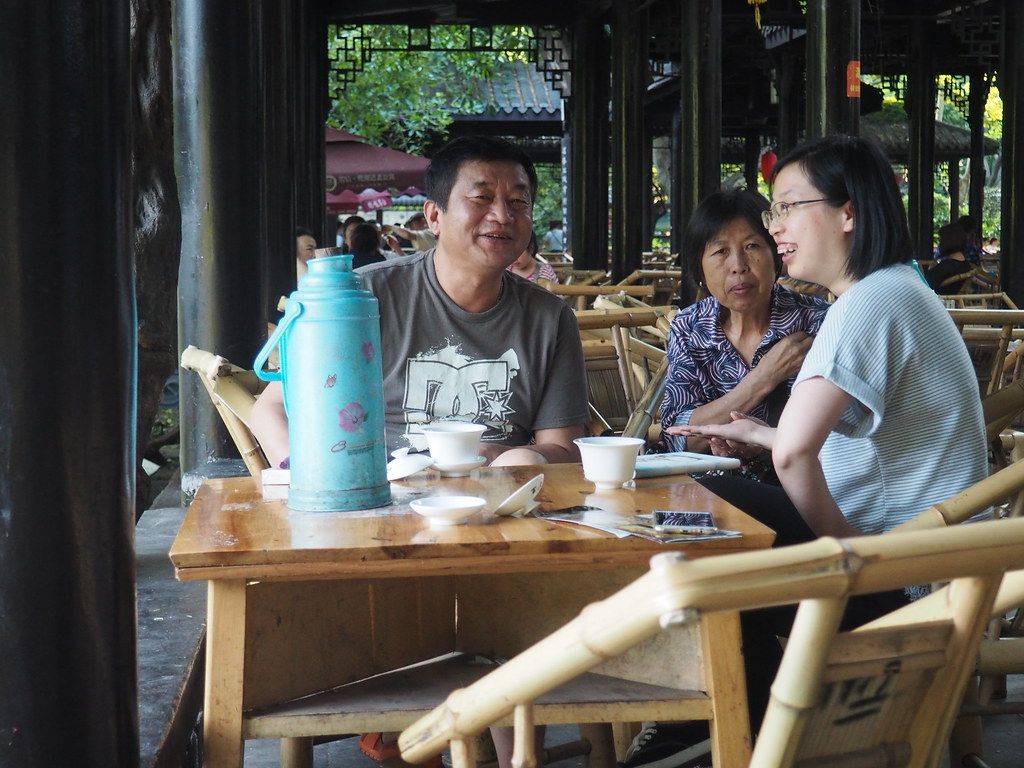
- How it works: Find an empty bamboo chair and sit. Someone brings a menu; you get a 盖碗 (gàiwǎn, lidded bowl) of jasmine (三花, sānhuā) — about ¥16–35. There's a hot-water flask to refill yourself. One cup buys you the whole afternoon.
- Ear cleaning (采耳, cǎi ěr): Roaming masters with tuning-fork tools clean your ears for ¥30–100. It's bizarre, ticklish, and deeply relaxing — a real local ritual, not a gimmick.
- Snacks: Bring your own 钵钵鸡 (bōbō jī — cold poached chicken on skewers in chili-sesame oil); nobody minds.
Local tip: Want a lakeside seat? Arrive before noon. By 4pm they're all taken by old folks playing mahjong and 相亲角 (the "marriage market" of parents posting their kids' dating résumés — go look, it's hilarious).
The Pandas 大熊猫 — Go at Opening
The Chengdu Research Base of Giant Panda Breeding (成都大熊猫繁育研究基地) opens at 7:30am. Be there at opening. By 10:30 the pandas eat their fill and sleep, and the crowds swarm. Early = active pandas munching bamboo + cool weather.
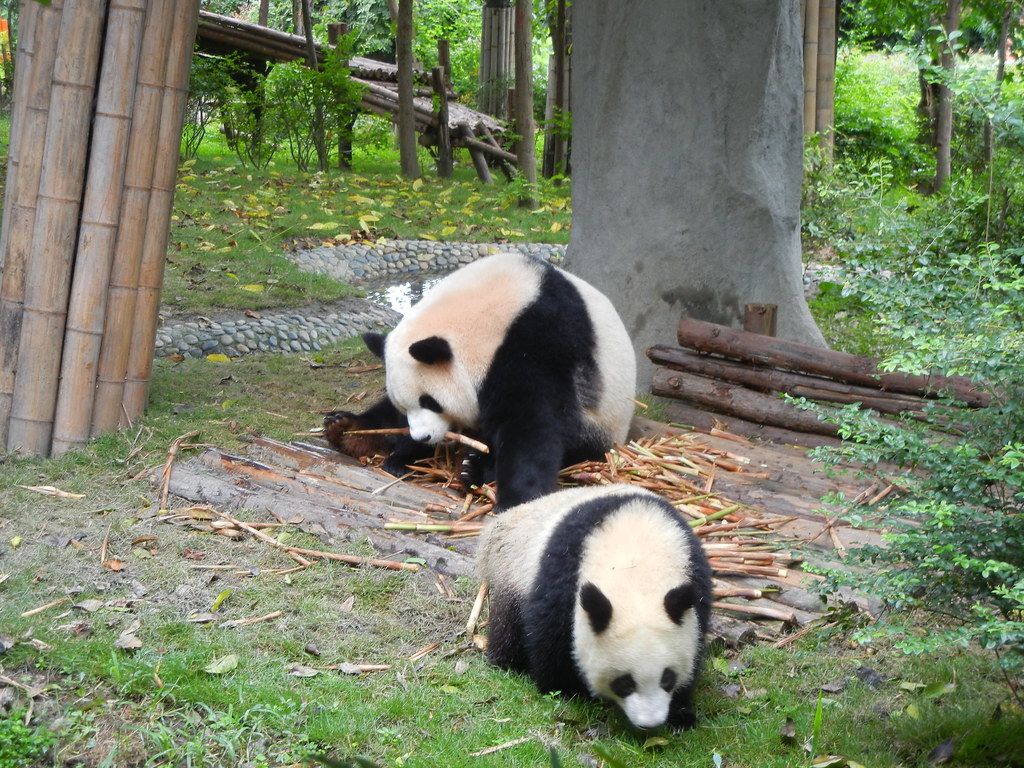
- Plan: Buy the internal shuttle ticket at the gate, ride straight to the Moon Nursery (月亮产房, Yuèliàng Chǎnfáng) where the tiny cubs are, then walk back downhill through the enclosures.
- Getting there: Metro Line 3 to Panda Avenue (熊猫大道) station, then shuttle bus 408/D025; or Line 3 to Chengdu Zoo + bus 198. Ticket ¥55.
Skip This / Do This Instead
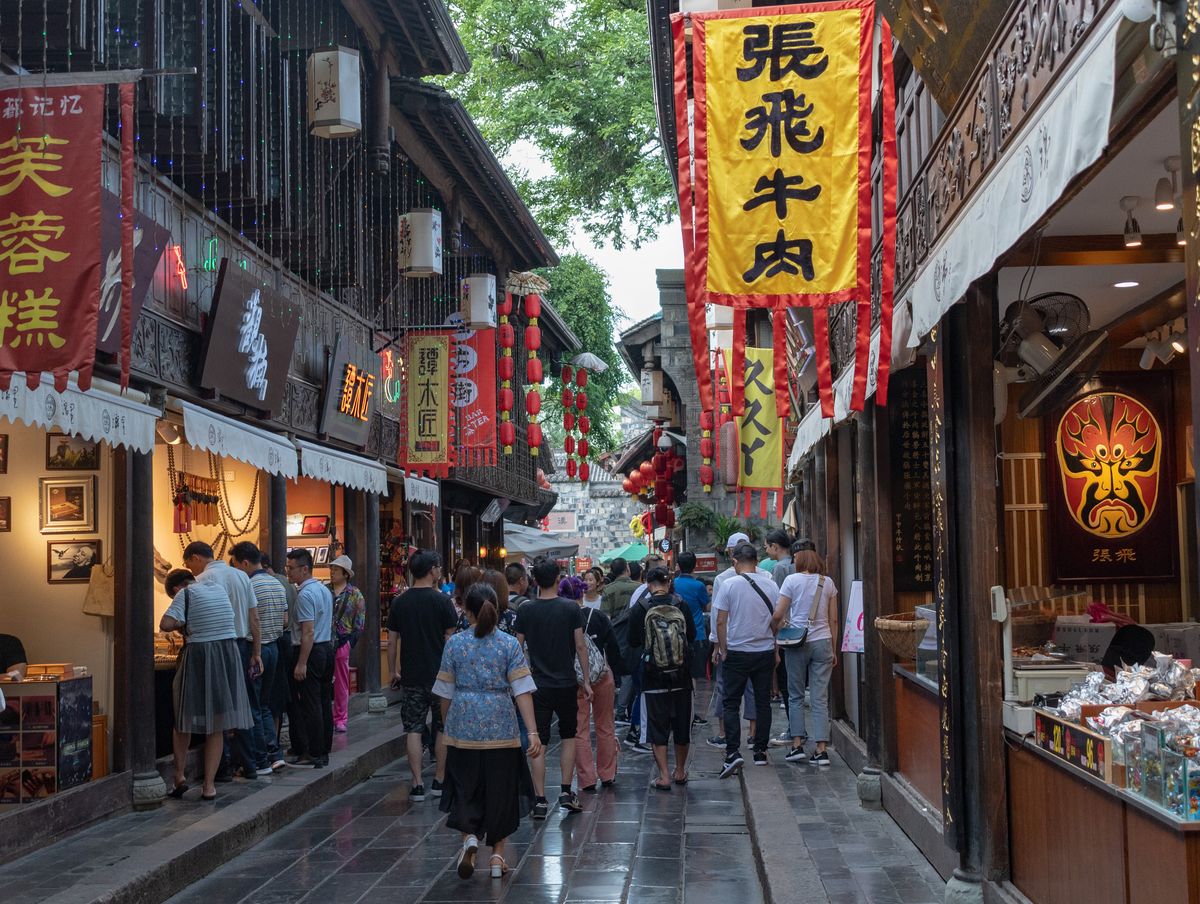
- Kuanzhai Alley (宽窄巷子, Kuānzhǎi Xiàngzi): Worth one quick walk-through, but it's a polished tourist commercial street. Instead, slip into the parallel lanes — 泡桐树街 (Pàotóngshù Jiē) and 小通巷 (Xiǎotōng Xiàng) — for quiet indie cafés and real 文艺 (artsy) vibe.
- Jinli (锦里): Over-commercialized. Instead, eat the street snacks outside Wenshu Monastery (文殊院, Wénshūyuàn) — same flavors, fewer touts, plus a beautiful working temple.
- Taikoo Li (太古里): Fine for shopping/people-watching by the temple, but don't eat there — overpriced.
Nightlife: Jiuyanqiao 九眼桥
Two bar strips face each other across the Jin River (锦江): Jiuyanqiao (九眼桥, Jiǔyǎnqiáo) — Chengdu's oldest bar zone, full of live house and folk-music bars with riverside terraces — and Lan Kwai Fong (兰桂坊) opposite. Stand on the covered bridge at night for the full neon view. For clubbing, locals go to the 339 TV Tower area. Beers from ~¥30–50.
Day Trip: Leshan Giant Buddha 乐山大佛
Take the high-speed train from Chengdu East (成都东站) — about ¥54, ~55 min — to Leshan. The Giant Buddha (乐山大佛) is 71m tall, carved into a cliff at a river confluence.
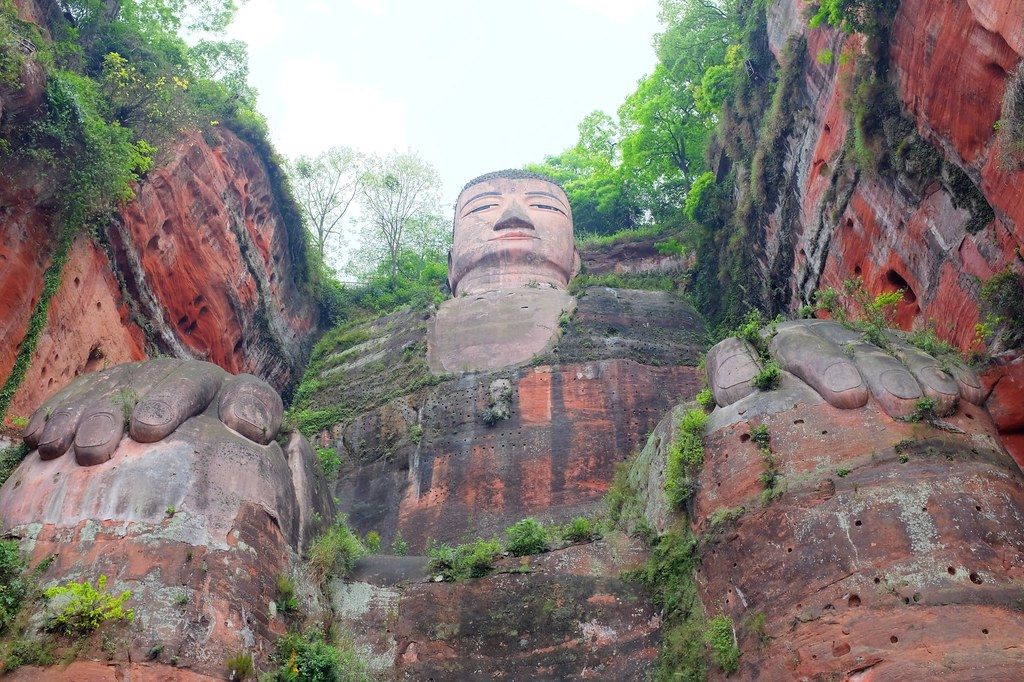
- Climb the cliff stairs for the up-close path, or take the boat (~¥70, 40 min) for the full front view without the queue.
- Eat: Head to nearby Sujie ancient town (苏稽古镇) for the dish Leshan invented — 跷脚牛肉 (qiàojiǎo niúròu, "dangling-foot" beef in clear broth) and 甜皮鸭 (sweet-skin duck).
A Perfect Local Day
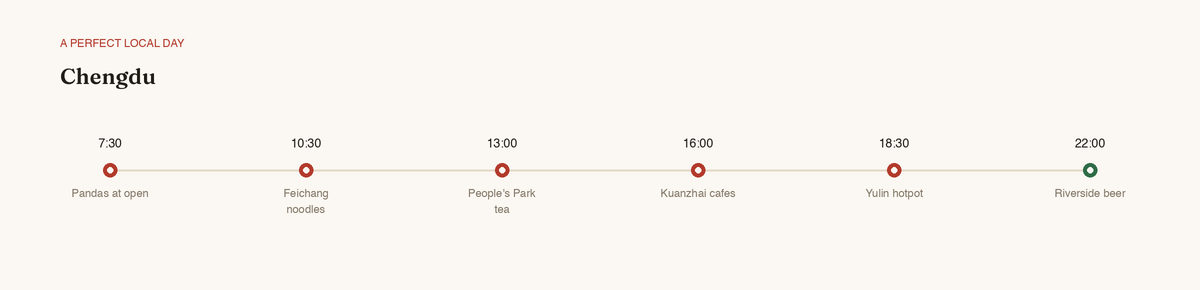
- 7:30am — Pandas at opening (Line 3).
- 10:30am — Metro back; 肥肠粉 (féicháng fěn, pig-intestine rice noodles) for a real Chengdu breakfast.
- 1pm — Tea, ear cleaning, and mahjong-watching at He Ming, People's Park.
- 4pm — Wander Xiaotong Alley + cafés near Kuanzhai.
- 6:30pm — Hotpot or shāokǎo in Yulin.
- 10pm — Riverside beer at Jiuyanqiao.
Local tip: Download Amap (高德地图) for the metro and Dianping (大众点评) to find the 苍蝇馆子 with 4.5+ ratings off the main roads. Pay with Alipay/WeChat — almost nowhere takes cash anymore. 安逸得很!