So you're finally coming to Beijing — good. Forget the tour-bus checklist for a minute. The Beijing I actually live in happens in the alleys, at 7am breakfast counters, and on quiet lakes the guidebooks never mention. Here's how to do it like one of us.
Hutongs: Where to Wander (and Where to Run From)
Everyone gets shoved toward Nanluoguxiang (南锣鼓巷, Nán-luó-gǔ-xiàng). Skip it, or pass through fast — it's a 700-year-old alley turned into a corridor of milk-tea chains and selfie crowds. The real 京味儿 (jīng wèir, "Beijing flavor") is one block over.
- Wudaoying Hutong (五道营胡同, Wǔ-dào-yíng) — my favorite. A calm 632-meter lane near Yonghegong Lama Temple, full of vegetarian spots, indie boutiques, and cat cafés. Metro Line 2/5 → Yonghegong Lama Temple (雍和宫).
- The Gulou (鼓楼, Drum Tower) back alleys — Maoer, Banchang, Beiluoguxiang. Real residents, persimmon trees, old men playing chess.
- Yangmeizhu Xie Jie (杨梅竹斜街) near Dashilan — a sub-500m diagonal lane quietly redesigned by designer Kenji Hara, mixing real residents with bookshops and design stores.
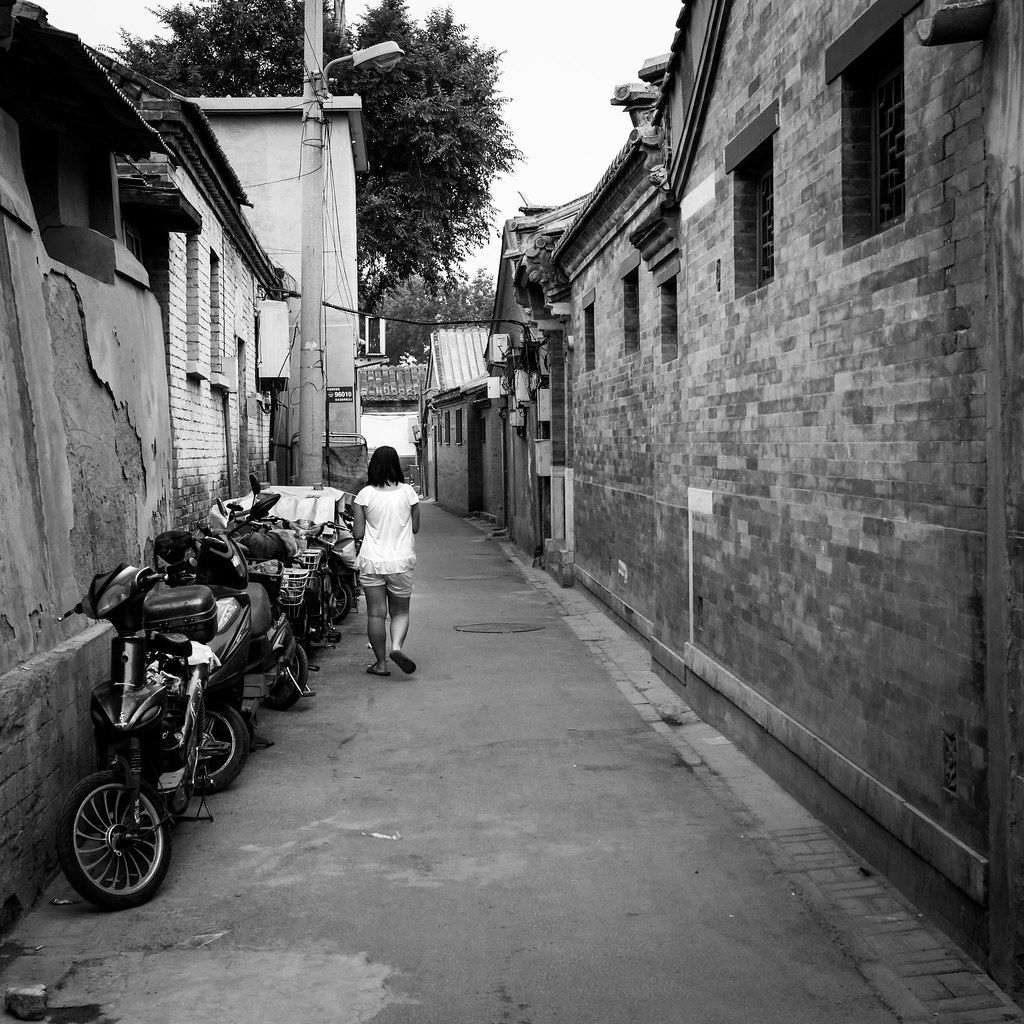
Local tip: Hutongs are people's homes, not a theme park. Glance through an open courtyard gate, don't barge in. And go early morning — golden light, no crowds, old Beijing waking up.
Breakfast Like You Mean It
We take breakfast (早点, zǎodiǎn) seriously, and it's eaten standing up or hunched over a plastic stool by 7am.
- Jianbing (煎饼, jiān-bǐng) — the king of street breakfast. A thin mung-bean crêpe with egg, scallion, crispy cracker (薄脆), and sauce, folded hot off the griddle. ~8–12 RMB from a cart.
- Baozi + chao gan (包子 + 炒肝) — steamed buns with a garlicky stewed pork-liver-and-intestine gravy. Go to Yao Ji Chao Gan (姚记炒肝) at Gulou — locals queue from 6am; ~25 RMB a person. We drink chao gan straight from the bowl rim, no spoon.
- Douzhi (豆汁, dòu-zhī) — I have to warn you. Fermented mung-bean milk, sour and funky; first-timers say it smells like dishwater. Pair it with a 焦圈 (fried dough ring) like the regulars do. Try Yin San Douzhi (尹三豆汁), ~15 RMB.
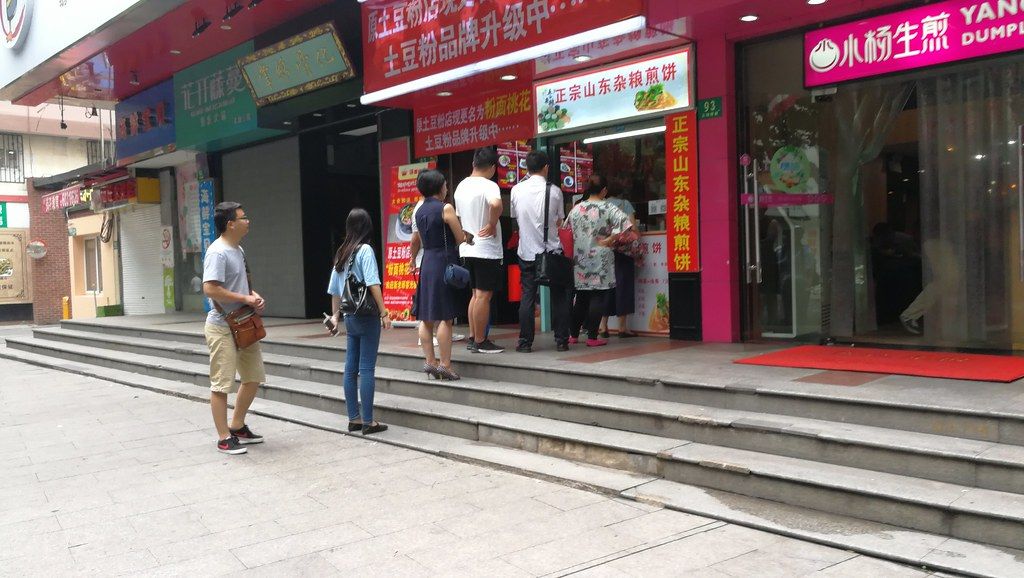
Local tip: Order douzhi with jiaoquan and a side of shredded pickle — the "old three" (老三样). Take one sip. If you hate it, you've still earned the story. Nobody's born loving it.
Peking Duck Where Locals Actually Go
Here's the open secret: most Beijingers don't eat duck at Quanjude (全聚德) anymore — it's the famous tourist chain, and on the Dianping duck rankings it sits around 7th. The local pick is:
- Siji Minfu (四季民福, Sì-jì Mín-fú) — consistently #1 on Dianping. The branch near the Forbidden City moat has a view; the Dongsi Shitiao (东四十条) branch has shorter lines. ~150–200 RMB/person, and the non-duck Beijing dishes are excellent too.
- Dadong / Xiao Dadong (大董 / 小大董) — modern, crispier "lean" duck.
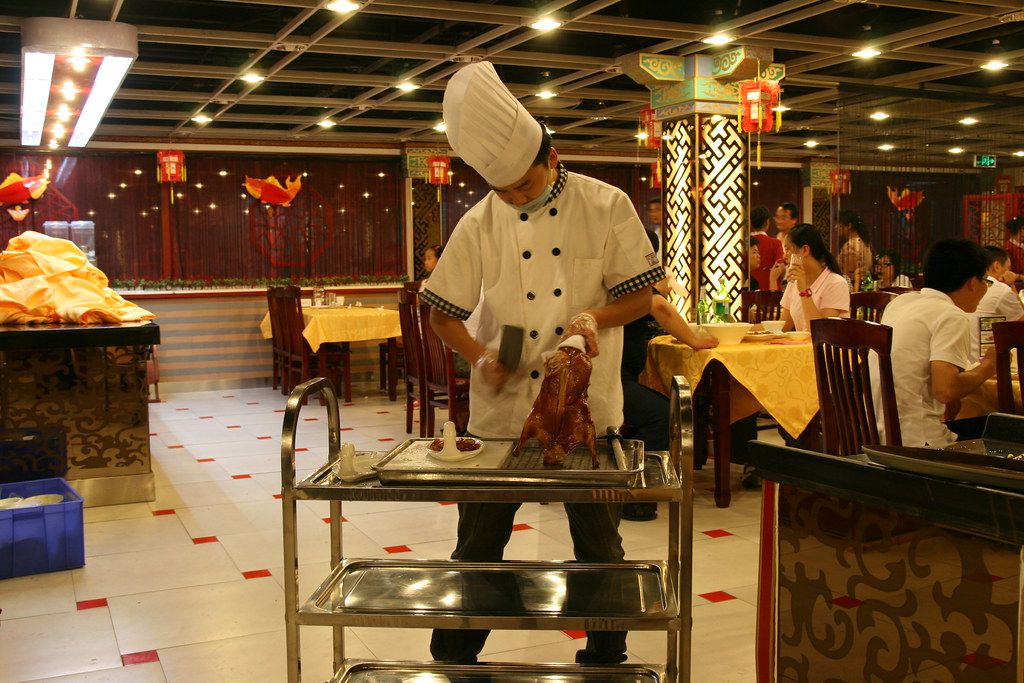
Local tip: Book Siji Minfu, or come at 5pm before the dinner rush — walk-ins wait 1–2 hours on weekends. Roll the duck with scallion, cucumber, and a dab of sweet bean sauce; dip the crispy skin in sugar first.
The Great Wall: The Right Section
Badaling (八达岭) is the postcard one — and a wall of human bodies. Two better options:
- Mutianyu (慕田峪, Mù-tián-yù) — restored, gorgeous, far fewer crowds, with a cable car up and a toboggan slide down. Take the Huairou-Miyun suburban rail (怀密线) from Beijing North to Yanqi Lake (雁栖湖), then a shuttle; or the Mubus (慕巴士) direct coach. This is what I send first-timers to.
- Jiankou (箭扣, Jiàn-kòu) — the wild, crumbling, ungentrified wall locals hike for the drama. Steep, no railings, genuinely dangerous in spots. Only for fit hikers; the classic route is Jiankou → Mutianyu. From Dongzhimen, bus 916/936 to Huairou (~8 RMB), then a local minibus.
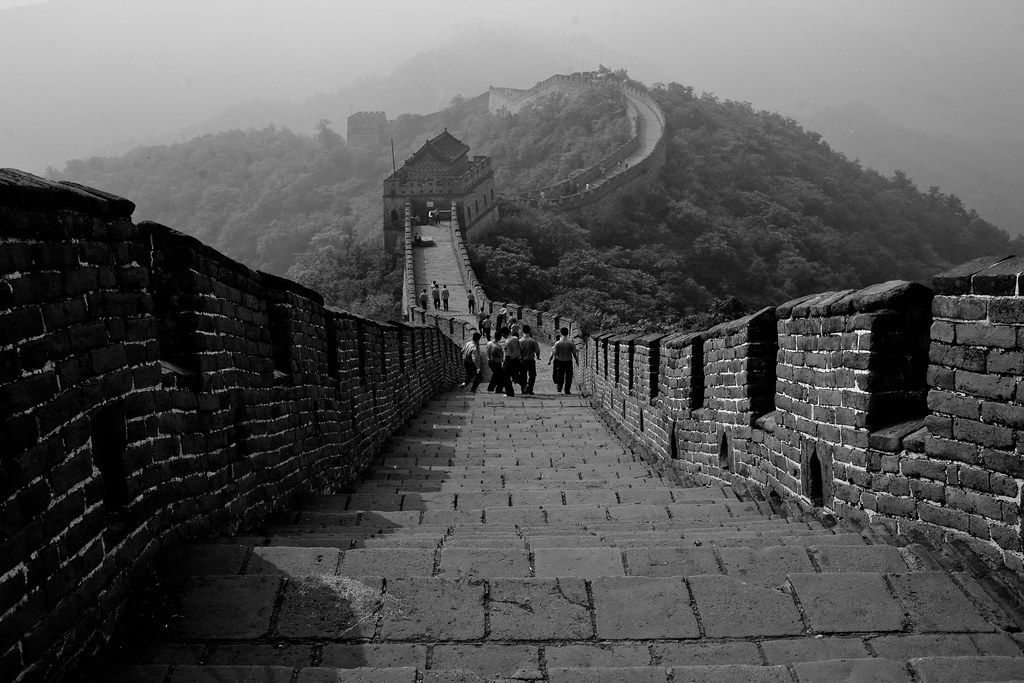
Local tip: Do Mutianyu, not Badaling, full stop. Go on a weekday, take the cable car up and the toboggan down. Only attempt Jiankou with good shoes, daylight to spare, and a downloaded offline map.
Lakes: Houhai vs. Where We Actually Sit
Houhai (后海) is pretty by day but its bar street is wall-to-wall identical bars playing the same songs — honestly, mostly tourists; few locals drink there. The water and the side hutongs are still lovely, so:
- Walk the Qianhai → Yinding Bridge (银锭桥) lakeside path at dusk instead of entering the bars.
- Head to Xihai (西海), the quietest of the three Shichahai lakes — lotus flowers, lakeside boardwalk, locals walking dogs and flying kites. This is where we go.
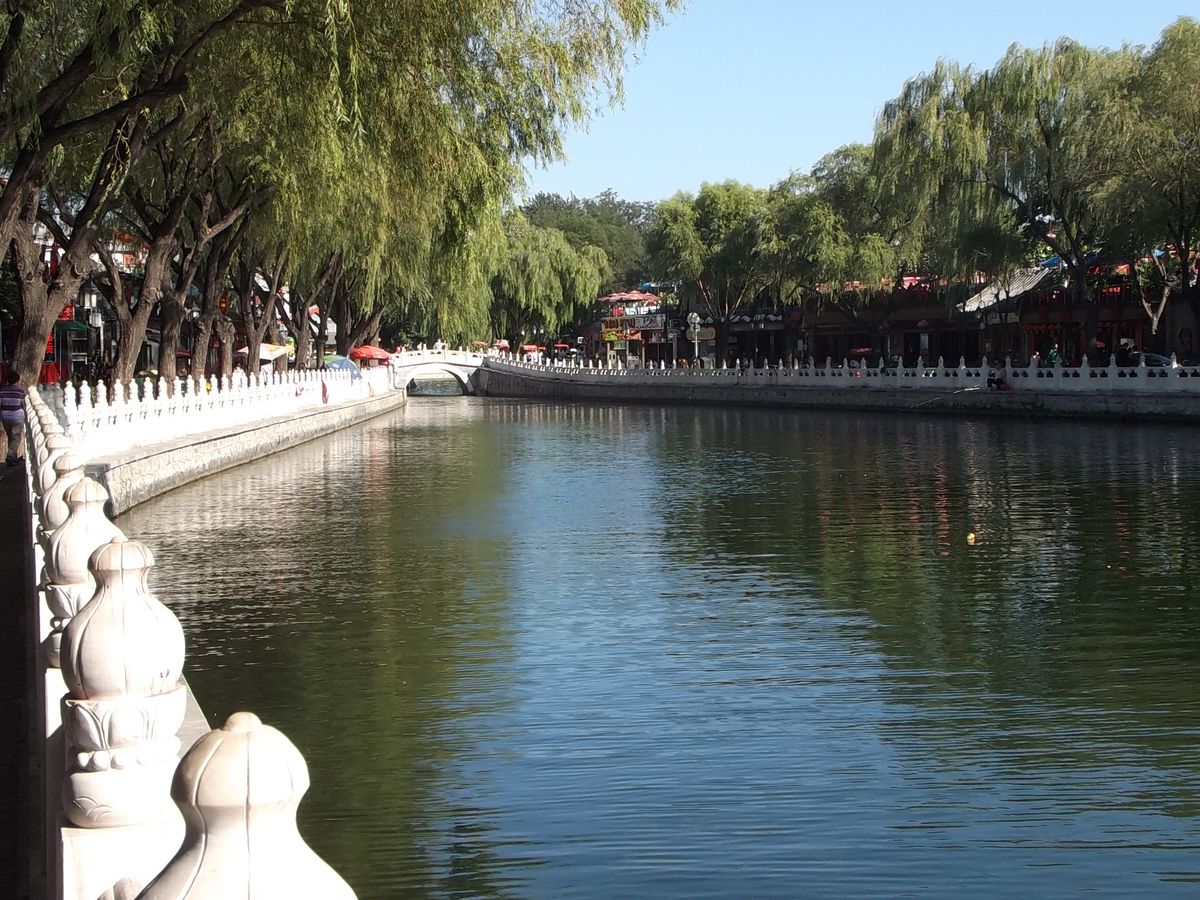
Local tip: In the Shichahai back alleys, the good bars are hidden inside courtyards — no lake view, but quiet, candlelit, and real. Skip anything with a guy out front shouting at you.
Courtyard Cafés & Panjiayuan
For coffee, the hutongs hide gems: Soloist and Fú Sān (福叁) near Yangmeizhu both let you climb onto a siheyuan rooftop terrace ("上房揭瓦"). On Wudaoying, S.O.E Coffee has a clingy orange cat and a balcony over the alley.
For treasure-hunting, Panjiayuan Antique Market (潘家园旧货市场) — China's biggest flea market, 3,000+ stalls of porcelain, scrolls, jade, old Mao-era kitsch. Metro Line 10 → Panjiayuan, Exit B. The "ghost market" (鬼市) runs Fri/Sat/Sun, with vendors setting up from 4am to ~8am — that's when the real finds appear.
Local tip: Come Saturday at dawn, bring cash, and haggle hard — start at 30–40% of the asking price. Most "antiques" are reproductions; buy what you love, not what you think is old.
A Perfect Local Day
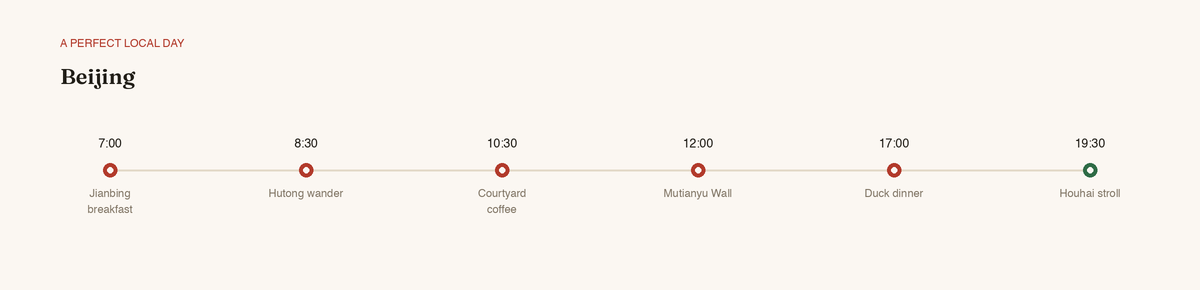
- 7:00 — Jianbing from a cart, or chao gan + baozi at Yao Ji (Gulou).
- 8:30 — Wander the quiet Gulou and Wudaoying hutongs in morning light.
- 10:30 — Rooftop coffee at a courtyard café.
- 12:00 — Head out to Mutianyu; hike, cable car, toboggan.
- 17:00 — Back in town, duck dinner at Siji Minfu (booked ahead).
- 19:30 — Sunset stroll along Xihai/Houhai to Yinding Bridge.
- 21:00 — Nightcap in a hidden siheyuan bar off Shichahai.
Local tip: Get a transit QR code in Alipay or WeChat before you arrive — Beijing's metro is cheap (3–7 RMB), fast, and English-signed. Cabs use Didi. You won't need much cash beyond Panjiayuan.